
- Verdict
- A warm community mystery built for chat
- Released
- 29 Oct 2026
- Platforms
- PC, macOS
- Streamer fit
- Story-first, Chat-first, Community-led
- Genres
- Role-playing (RPG), Adventure, Indie
Invitations, refusals, clue trails, and Sense Games give viewers frequent choices without demanding constant execution.
A strange introduction, solved refusal, or festival recruit can resolve cleanly, although many moments depend on prior context.
The deadline, 51 residents, and expanding clue network provide strong session goals and an obvious reason to return.
The apartment-complex setting and neighbour-collecting hook are easy to explain without entering a dominant launch category.
Four independent reviews and the first Steam recommendations favour its cast and structure, with too little volume for a stronger claim.
Takeaway
Danchi Days earns an 8/10 Chum score. Its nine-day festival campaign turns every new neighbour, refusal, and clue into something a streamer can discuss with chat, while the 51-resident roster gives a series visible momentum. The main limit is context: its best discoveries mean more after viewers understand the people and problems involved.
What is Danchi Days?
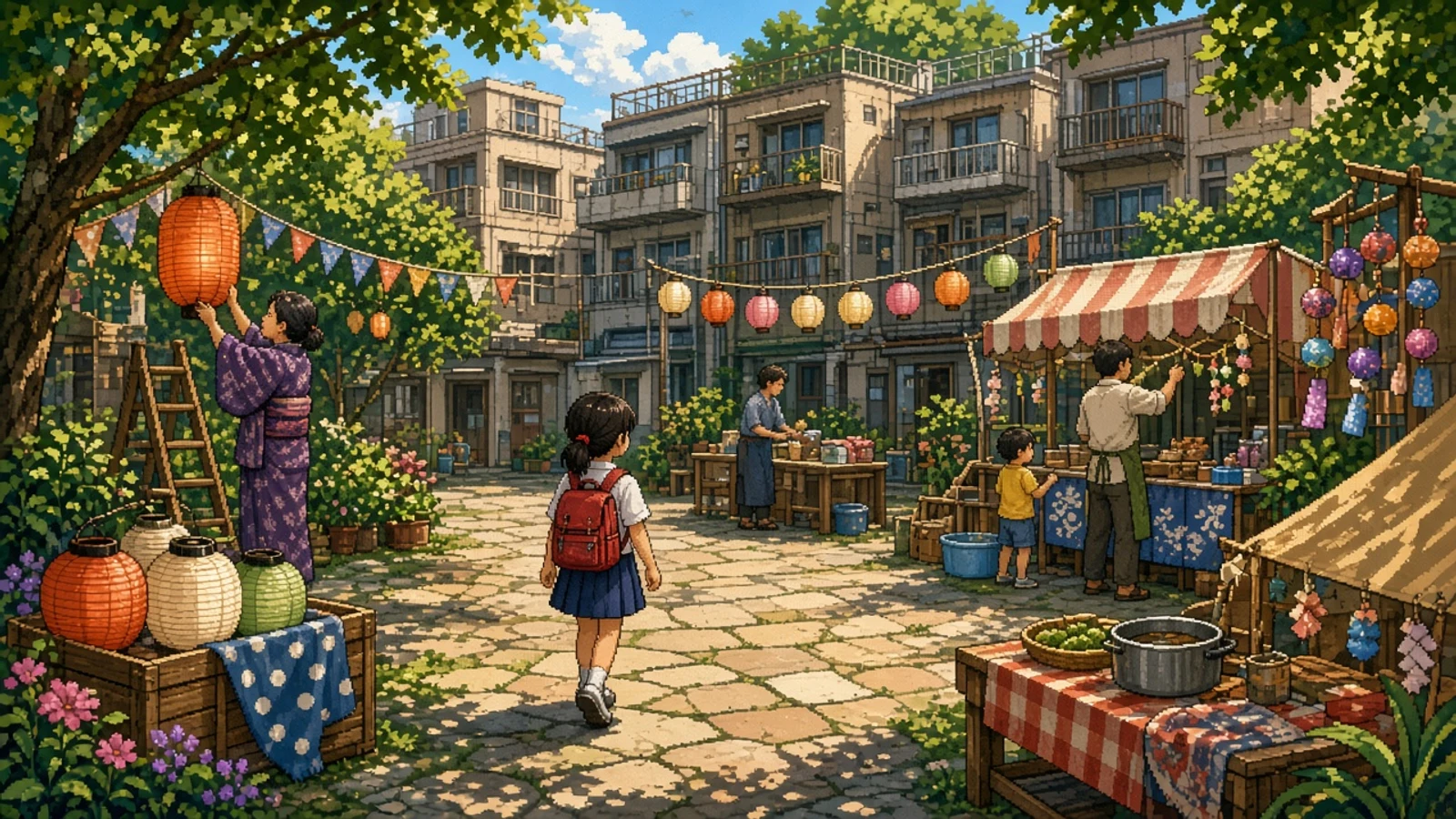
Danchi Days is a social adventure about Hoshino, a teenager with nine in-game days to revive a neighbourhood festival in a Japanese apartment complex. A normal stretch of play means walking the estate, meeting residents, asking them to join, and investigating why some refuse. The goal is to recruit enough of the community while uncovering the stories that make each answer matter.
The complex is both the map and the mystery. Hoshino explores its homes and shared spaces, speaks with 51 residents, and records what she learns in the NeighborDex. NeighborNet connects people and clues, so a conversation in one part of the estate can point toward the person or information needed elsewhere. Progress comes from understanding the neighbourhood rather than raising a combat build.
Some problems become grid-based Sense Games. These encounters turn a resident's thoughts or situation into a compact spatial challenge, giving the investigation a different rhythm without introducing conventional combat. The Steam release is available on Windows and macOS, and it carries Steam Deck Verified status.
This is the first title from gingham games. Its stated structural inspiration, Sakura Momoko no Ukiuki Carnival, helps place it in a line of community adventures built around meeting a large cast and solving the social conditions behind recruitment. Danchi Days gives that structure a tight deadline and one dense residential setting, so the roster is also a picture of how a neighbourhood fits together.
How the game has been received
Early critical reception is positive, with an important sample-size warning. On 30 October, Metacritic showed 85 from four reviews. Noisy Pixel praised the connected cast, visual identity, and way the time limit shapes exploration. Siliconera likewise found the neighbour-collecting structure pleasant and engaging.
Final Weapon and Gamer Social Club add to that positive direction, while Steam's first nine recommendations were all positive. Four critic reviews and nine user recommendations do not establish a broad consensus, but their agreement strengthens the case for a story-led stream built around the cast.
The Chum score measures streamability, not conventional game quality. Danchi Days' positive early reception supports the recommendation, while the limited review volume keeps the reception card below the top tier.
The streamer verdict
Danchi Days gives chat useful decisions at two levels. Viewers can react to the immediate invitation or refusal, then help connect names and clues across the wider complex. A streamer can keep the room involved by reading NeighborDex updates aloud and asking for theories before following a lead.
The nine-day limit gives each broadcast an understandable clock. Start a session by naming the residents still in question, then finish with the recruits gained and the problems left unresolved. That structure lets someone joining halfway through understand the current objective without hearing every earlier conversation.
Spoilers are the main moderation issue. A returning player can name the condition behind a refusal or reveal which relationship unlocks a story. Ask viewers to suggest a person or lead without posting the solution, and let the streamer decide when direct help is welcome.
Run the festival as a community project
Treat each in-game day as a chapter rather than trying to optimise every route off stream. Keep a visible shortlist of residents, let chat choose between two plausible leads, and use Sense Games as focused breaks from conversation. The format works best when recruitment feels like a shared investigation, not a checklist race.
Final verdict
Danchi Days earns an 8/10 Chum score. Story-first, cosy, and chat-first creators get a clear nine-part framework, a large cast worth discussing, and frequent audience choices. Positive early reception adds confidence, but the strongest stream depends on protecting discoveries and carrying character context from one session to the next.