
- Verdict
- Social deception with instant payoffs
- Released
- 13 Oct 2026
- Platforms
- PC
- Streamer fit
- Competitive, Co-op and squads, Community-led
- Genres
- Strategy, Indie
Negotiation drives every auction, so audience conversation fits mainly between rounds.
A confident lie, reckless bid, and damaging clause reveal form a complete highlight in seconds.
Random clauses, cards, changing groups, and Early Access updates can keep repeat sessions distinct.
The specific auction format is easy to pitch and unlikely to be dominated by established competitive channels.
Takeaway
Double Dealers earns a provisional 8/10 Chum score. Its auctions turn a spoken claim into a timed bid and an immediate reveal, giving every round a setup, argument, and payoff that viewers can follow. The cost is constant voice-channel attention, while Early Access stability and a tiny launch sample make the recommendation provisional.
What is Double Dealers?
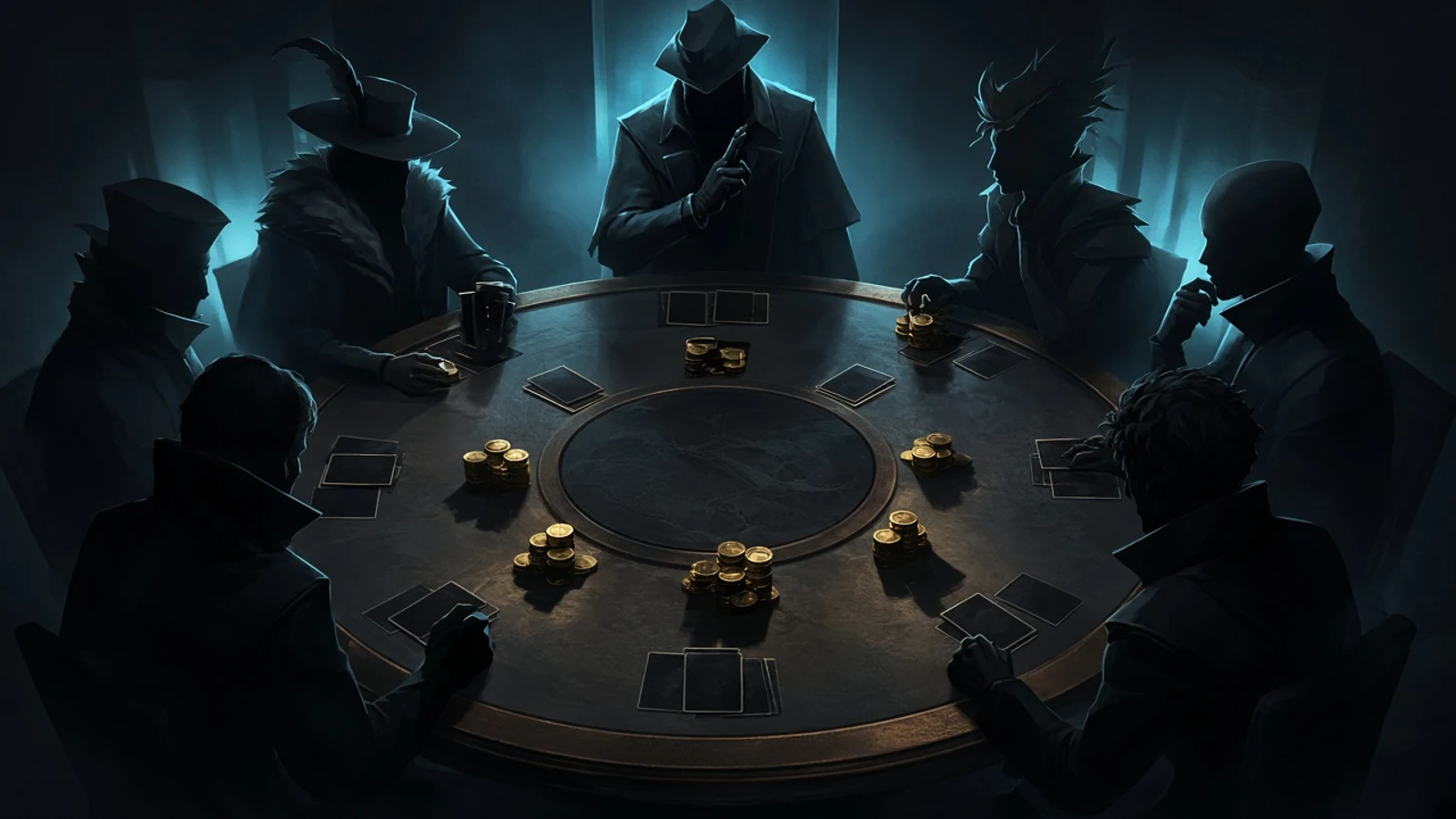
Double Dealers is a three- to six-player online auction game from Miklagard Studios. Every player begins with items, and each auction gives one person the seller role. The seller chooses a lot and can see its real market value and two hidden Clauses. Everyone else has a timer, a limited bank balance, and whatever story the seller chooses to tell.
The seller tries to turn incomplete information into profit. Buyers can challenge the pitch, form temporary alliances, or raise the price to pressure somebody else into a mistake. When bidding closes, the game reveals the item's real value and both Clauses. Those conditions can help the buyer, damage an economy, or alter another part of the match, so the reveal tests the seller's performance against the actual deal.
After every player has served as seller, the table enters a Market phase. Players decide whether to sell items for available cash or hold them in pursuit of later bonuses. They can also buy Cards that protect their own position, inspect information, or interfere with a rival. The official announcement describes Era sets as another reason to keep related items, which makes a purchase part of a larger portfolio rather than a single win or loss.
There is no solo mode. The repeated structure is a social match built from seller rotation, random Clauses, optional Cards, and changing relationships around the table. Double Dealers entered Early Access on 13 October 2026. Miklagard plans roughly six months in that state, with additional Clauses, Cards, and playable characters planned alongside balance, performance, and content work.
How the game has been received
The launch evidence is too sparse for a settled reception verdict. On 14 October 2026, Steam's all-language review API reported a Positive label with 16 positive and four negative reviews. Metacritic listed no critic reviews, and no OpenCritic page was available. Twenty launch reviews can identify neither a durable player consensus nor the current reliability of a multiplayer build.
The useful independent material covers the demo. A detailed GamesStarter hands-on guide praised the tension between bluffing, hidden Clauses, and cash management while warning that values and rules were still changing. Mario Manstar's independent demo playthrough supplies a longer look at the live auction loop but is not a scored review. The retired demo had a larger positive Steam sample, alongside complaints about crashes, disconnects, Cards, and Clause bugs. Those reports provide context, not a verdict on the Early Access build.
The Chum score measures streamability, not conventional game quality. Double Dealers does not yet have enough independent Early Access evidence for a Game reception fit score.
The streamer verdict
The auction gives a broadcast a compact dramatic unit. Viewers hear the claim, watch the bids rise, and see the truth arrive on schedule. A good seller can build a character around confidence or hesitation, while buyers create their own story by trusting the wrong person or spending past a sensible limit. The result remains understandable even when a clip begins halfway through the pitch.
That same voice-led design leaves little room for ordinary chat interaction. Reading messages during an auction can expose hesitation, miss a bluff, or slow the table. The host needs deliberate audience windows between seller turns and during the Market phase. A producer or non-playing moderator would help a larger channel preserve chat without weakening the match.
Make the table legible
Use a consistent group and introduce each player before the first auction. Ask sellers to state the lot and opening claim clearly, then leave the natural argument alone. Between rounds, recap the biggest fortune, the weakest balance sheet, and one unresolved grudge. That gives returning viewers a series story without inventing rules outside the game.
Chat can participate without feeding private information to a player. Let viewers vote on the most convincing seller, predict whether the next lot is dangerous, or choose a harmless table award after the reveal. Avoid polls that tell a buyer what the audience has seen if the broadcast layout exposes information the player should not use.
Early Access and content concerns
Multiplayer stability is the main production risk. A disconnect can interrupt an entire table, and the developer still lists performance and balance work among its Early Access priorities. Schedule time for lobby setup, use a group that can recover from a failed match, and do not promise tournament stakes until the current build has proved reliable for that crew.
Steam's developer notice identifies references to and depictions of alcohol consumption and tobacco use. Regional rating information also flags coarse language, criminal acts, and simulated gambling. The game uses voice chat and encourages deception, so the streamer remains responsible for group conduct and language even when the systems themselves are the source of the argument.
Final verdict
Double Dealers earns a provisional 8/10 Chum score for creators with a dependable three- to six-person group. The auction and reveal structure is built for clips, rivalries, and repeat sessions. Constant voice traffic limits chat space, and the lack of full-build criticism means Early Access performance could still change the recommendation.