- Verdict
- A clever collaborative spy puzzle
- Released
- 13 Oct 2026
- Platforms
- PC
- Streamer fit
- Chat-first, Discovery-focused, Challenge runners
- Genres
- Puzzle, Role-playing (RPG), Simulator, Adventure
Dossier reading, face reconstruction, and conversation choices give viewers useful details to compare with the host.
An absurd identity or one disastrous answer gives a short clip a clear setup and an immediate consequence.
The three-to-four-hour campaign is compact, although variable missions and perfect-score attempts support return visits.
The premise has little direct launch competition, but a small release asks the creator to bring the first audience.
Takeaway
Legion Was Here earns a provisional 7/10 Chum score. Reconstructing a stranger from a dossier and then surviving a conversation gives chat a real puzzle to share. The campaign is short, and launch reception is far too small to show whether the full set of missions sustains the idea.
What is Legion Was Here?
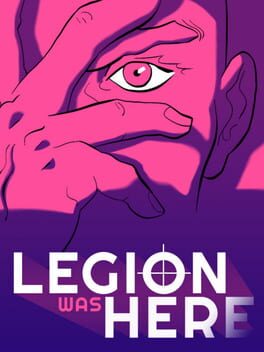
Legion Was Here is a single-player spy deduction game developed by Geoffroy Monde and published by Surefire.Games. It released for Windows on 13 October 2026. You play Legion, an agent who can change his appearance and must impersonate people close to a target. A normal mission starts at an operating table, moves through a file full of personal evidence, and ends in a conversation where the disguise has to survive scrutiny.
The face is the first puzzle. Photographs, drawings, documents, relationships, and small objects supply incomplete information about the person Legion needs to become. The official press page describes more than 900 million possible appearances, covering age, hair, eyes, facial features, and other details. The task is to interpret the evidence rather than copy one complete portrait.
The conversation is the stealth system. Once Legion reaches the target, multiple-choice questions test whether he knows the relationships, memories, and habits in the file. Players can write selected facts on his hand before leaving, but deciding what deserves that limited reminder is part of the deduction. A wrong face or answer raises suspicion, and failure can end with Legion's death.
The official listing estimates three to four hours for the full game. Missions can be repeated to improve a credibility score toward 100%, and some events change between attempts. That gives a short campaign a score-chasing structure without turning it into an endless deduction game. Its dark comedy includes strange clients and fatal failures, while a separate warning flags flashing lights and visual effects that may trigger seizures.
How the game has been received
Broad reception cannot yet be assessed. On 14 October 2026, Metacritic had no critic reviews, and the full game's Steam sample contained five positive recommendations with no generated review label. Five launch responses are useful encouragement, but they cannot establish a player consensus.
The substantial independent coverage concerns the demo. PC Gamer's Christopher Livingston found its packed dossier funny and surprisingly difficult, while a separate Wihel impression praised the tension of wondering whether every clue had been interpreted correctly. Those accounts support the central loop, but neither evaluates the released campaign's complete mission set.
The Chum score measures streamability, not conventional game quality. Legion Was Here does not yet have enough independent full-release evidence for a Game reception card, so the score remains provisional.
The streamer verdict
A dossier gives the audience an immediate job. Viewers can compare a sketch with a photograph, flag a family detail, or argue about which fact belongs on Legion's hand. The host still makes the final call, so chat participation can improve the programme without reducing it to a poll.
The mission phase provides the payoff. Every answer tests work the room has already watched, and a failed disguise explains itself quickly enough for a newcomer. The comedy helps a mistake travel as a clip, while a perfect score creates a visible challenge for creators who want to revisit a mission.
The short running time is the main limit. A first playthrough may fit into one long broadcast or two compact sessions, and repeated attempts will become less useful once chat knows the answers. The visual-effects warning also deserves a clear notice before play, particularly because one of the documented effects can affect light-sensitive viewers.
Give chat the case file
Build each mission around two phases. During preparation, read the evidence at a pace that lets viewers compare details, then lock in the face and hand notes without accepting later corrections. During the conversation, avoid polls that reveal the safest answer immediately. A final perfect-score attempt can work as a challenge segment after the first campaign is complete.
Final verdict
Legion Was Here earns a provisional 7/10 Chum score. It best suits chat-first discovery creators who explain deductions and can make a bad impersonation entertaining. The shared casework and visible interrogation stakes are strong live material, while the compact scope and missing full-release consensus keep it from a higher score.