
- Verdict
- Good focused playthrough
- Released
- 1 Oct 2026
- Platforms
- PC, Xbox Series X|S
- Streamer fit
- Discovery-focused, Chat-first
- Genres
- Shooter, Simulator, Adventure, Indie
Exploration, inventory choices, and unfamiliar systems create natural pauses for explanation and audience theories.
Unexpected discoveries, dangerous encounters, and improvised solutions make better clips than routine firefights.
The campaign supports a compact series, while finite discoveries and spoilers limit endless repeat value.
The audience is smaller than a major shooter, but a clear discovery premise can stand out.
Critics and players praise the immersive-sim freedom and setting, while bugs, performance, navigation, and menus recur in criticism.
Takeaway
RetroSpace earns a 7/10 Chum score. It gives a streamer a useful mix of exploration, strange systems, and readable danger without demanding that chat compete with every second of combat. The best version is a deliberate, curious playthrough rather than a speedrun through the surprises.
What is RetroSpace?
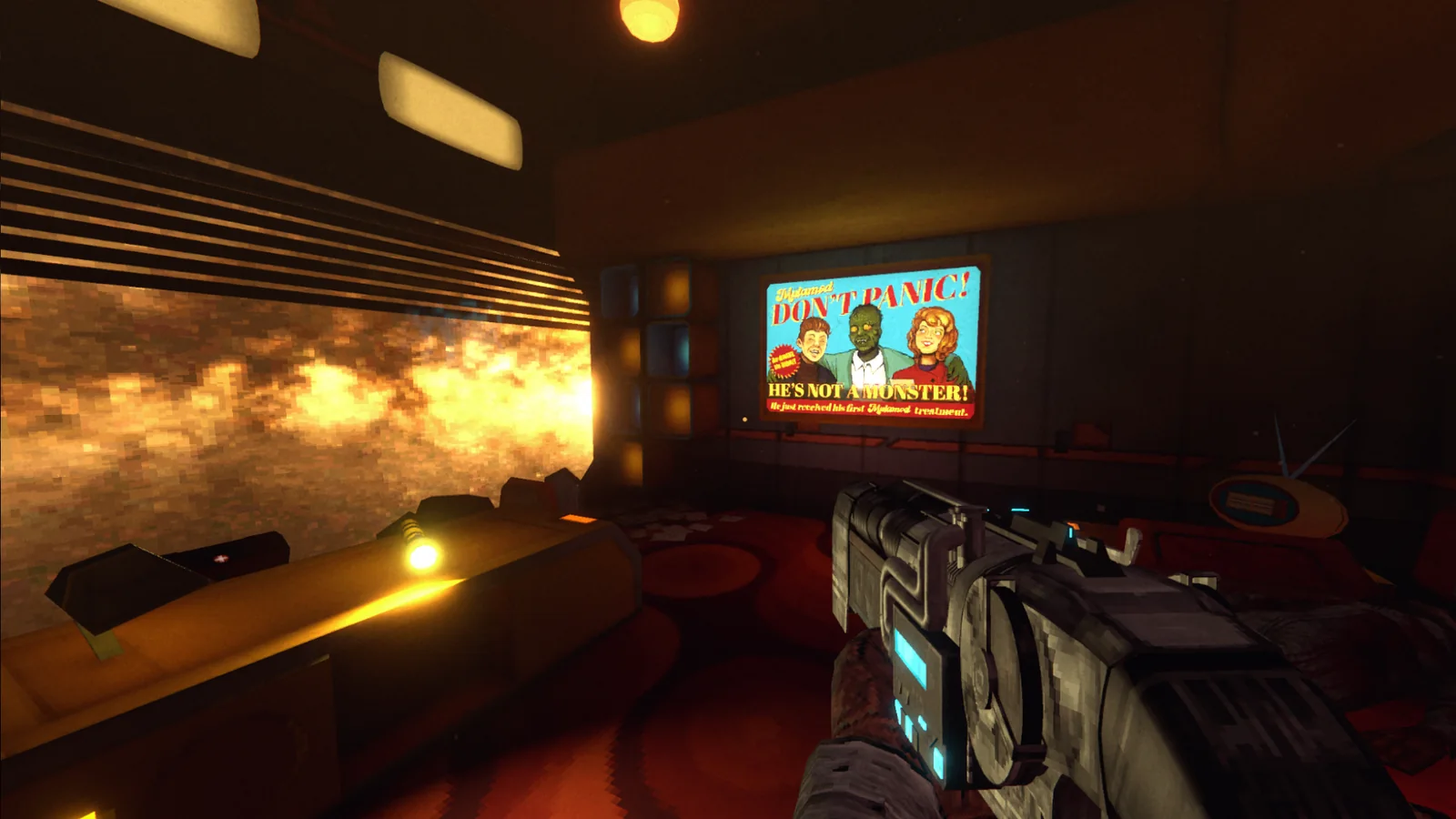
RetroSpace is a first-person space-horror immersive sim about a janitor trying to escape the Aurora 5 after the station is swallowed by a sentient black hole. You explore its interconnected decks, avoid or fight mutated creatures and manipulate station systems while deciding whether to save humanity or merely yourself. It openly belongs to the System Shock and Prey lineage, but its grubby disco-punk setting lets corporate machinery, body horror and absurd retro design occupy the same corridor.
A room is rarely just a room with enemies in it. Security devices, hazards, alternate routes, resources and creature behaviour can be combined or turned against one another. Fighting is possible, but it may spend ammunition that a locked system, environmental trap or quieter path could preserve. Exploration expands the player's options by uncovering tools, information and changes to the character, including mutations that can solve one problem while making the body itself feel less trustworthy.
The old-school comparison is accurate, but not the whole identity. RetroSpace is less interested in smoothly guiding everyone through a cinematic corridor than in letting curiosity create both solutions and disasters. Its campaign and different endings give the station a finite larger shape, while the systems make individual encounters feel personal. The key pleasure is not clearing rooms efficiently; it is discovering that an idea the game never explicitly suggested actually works.
How the game has been received
RetroSpace has been received positively, with technical qualifications. On 14 October, OpenCritic listed a 73 average with 75% of critics recommending it. The independent Gamesurf review praised its setting and immersive-sim freedom, while GamingTrend highlighted the world-building, weapons, and player choice. Across the wider coverage, bugs, performance, vague navigation, and cumbersome menus are the recurring limits.
Players are more enthusiastic. Steam was 90% positive across 445 reviews on 14 October. That response strengthens the Chum recommendation, but the technical criticism still matters for a stream built around uninterrupted exploration and readable choices.
The Chum score measures streamability. It is not a conventional game-quality score or a recommendation for every audience. Independently sourced reception is one factor in the broadcast verdict.
The streamer verdict
Choose it if your audience likes watching you investigate a place and make decisions with incomplete information. A viewer can arrive during a room, understand the immediate problem, and still enjoy the explanation of how you got there.
The game needs a premise because it is not a giant directory magnet. Lead with the station, the challenge, or the systems you are learning. A generic title leaves the strongest reason to watch hidden in the game itself.
Discovery is the content
The official Steam page describes RetroSpace as a love letter to immersive games with modern and genre-bending twists. That is a useful broadcast promise: the audience is there to see what the next room, machine, or rule does.
Say what you know before you act, then let the result land. Chat can suggest a route or remember a clue, but the streamer should keep the final choice moving. The audience is helping you think, not replacing the thinking.
Make a compact series
A focused game benefits from an episode plan. End on a discovery, a new area, or a decision that can open the next stream. That creates a clean return point without stretching a finite campaign into filler.
Formats worth trying
No-spoiler systems lab
Keep a short list of mechanics the audience has not seen yet and avoid revealing them in the title. Discovery becomes the reason to return.
Chat keeps the station map
Let viewers track locked doors, clues, and unresolved routes. A simple shared record gives the room something useful to do between episodes.
One decision per episode
Build each stream around a meaningful route, upgrade, or risk choice. It gives the VOD a clear shape and prevents the broadcast from becoming a room-by-room recap.
Final verdict
RetroSpace is a 7/10 Chum game for a streamer who can make curiosity feel communal. The category will not do the discovery work for you, but the game gives chat enough room to think, predict, and remember. Positive reception strengthens the score without raising it because the small category, technical rough edges, and context-heavy highlights still narrow the audience.