 8
8Streamer review
SPAM
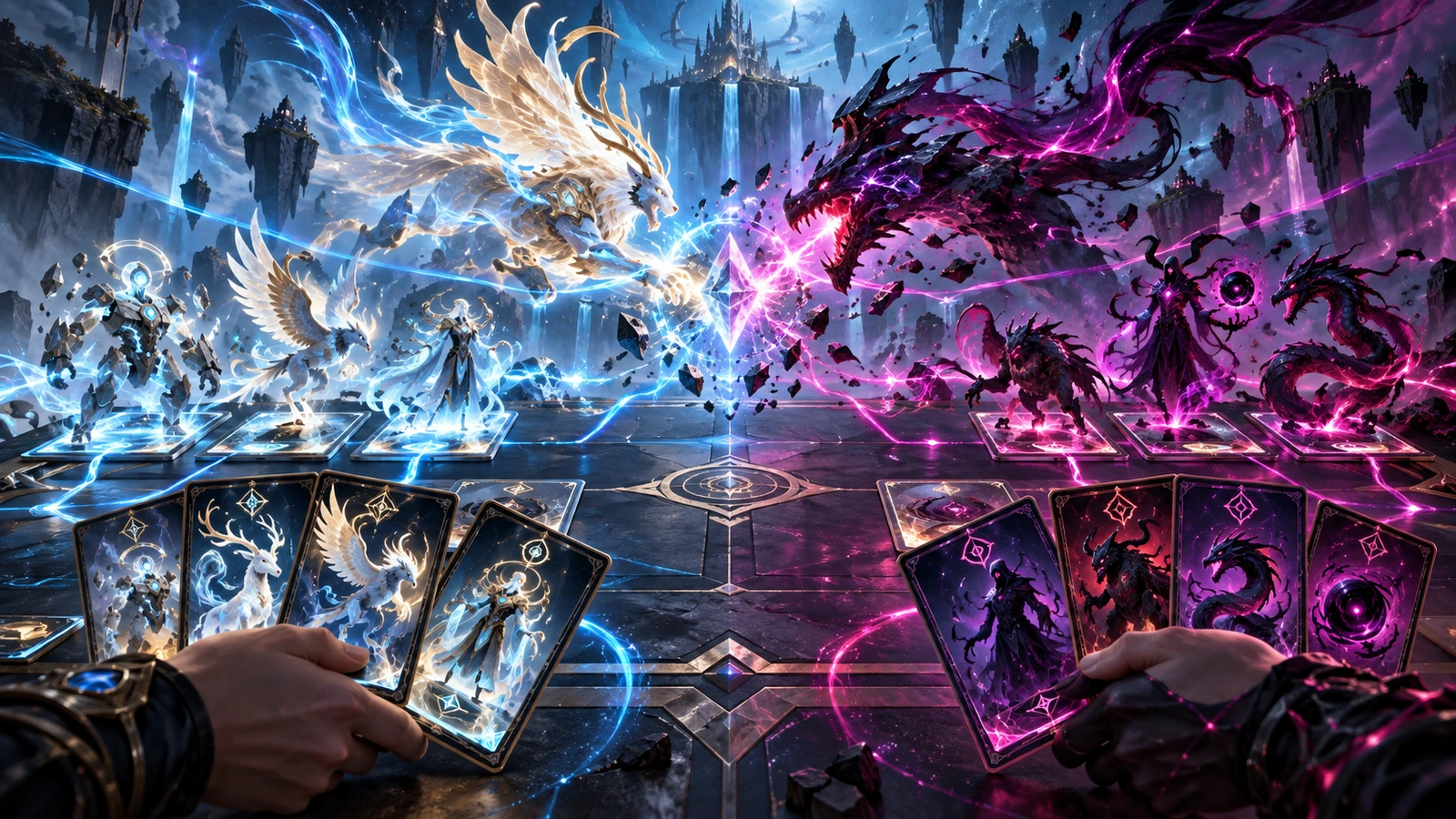
Turn-based PvP, evolving card combos, and direct friend duels give a streamer room to explain the plan and build a competitive series around visible decisions.

- Verdict
- A strong competitive card stream
- Released
- 7 Oct 2026
- Platforms
- PC, Linux
- Streamer fit
- Competitive, Community-led, Chat-first
- Genres
- Card & Board Game
Turn-based fights leave room to explain a line, compare cards, and answer chat before committing.
A risky upgrade or unexpected combo has a clear payoff, although the setup needs to stay visible.
Collection growth, deck experiments, ranked goals, and friend duels create durable returning formats.
A small launch category offers room to become recognisable, but discovery will mostly come from the format.
Steam players are strongly positive on launch day, although independent critic coverage is not established yet.
Takeaway
SPAM earns an 8/10 Chum score. Turn-based PvP gives a streamer time to make strategy legible, while deck growth and direct friend duels can support a competitive series. The main limitation is discovery: a small category is open, but it will not supply an audience on its own.
What is SPAM?
SPAM is a competitive card game built for players who enjoy tuning a deck and immediately finding out whether the idea survives contact with another person. It borrows the collection, synergy hunting and ranked climb of familiar digital card games, but its identity is deliberately scrappier and more comic. This is not a solitary roguelike deckbuilder with a scripted map of encounters; the opponent is another player with a plan of their own.
The interesting wrinkle is that a deck can change during the match. The Tox Shop presents chances to improve cards while the game is in progress, so the player is balancing the strategy they brought with them against the board that has actually developed. A strong list still matters, but so does recognising which card deserves investment now, what the other player is building toward, and whether an apparent short-term gain pulls the deck away from its win condition.
Outside a match, the structure is the familiar one of earning cards, refining combinations, challenging friends and testing the result on a ranked ladder. It is free to play and includes in-app and chance-based purchases, which makes collection and monetisation part of the experience rather than a footnote. The useful way to think about SPAM is as a live competitive laboratory: build an argument, play it against real opposition, then change the deck when the result exposes a bad assumption.
How the game has been received
There is not yet a broad critical consensus for SPAM, so the reception score is deliberately cautious. On October 7, the Steam store showed a Very Positive recommendation pattern across several hundred reviews. That is a meaningful early player signal for the combat and collection loop, but it is still a launch-day sample and does not answer how balance or monetisation will hold up over time.
The Chum score measures streamability. It does not rate balance, card acquisition, matchmaking, or the overall quality of the game. Independently sourced reception is one factor in the broadcast verdict.
The streamer verdict
This is a strong fit for a creator who enjoys thinking aloud. Name the win condition, explain the card you are playing around, and let chat predict the next upgrade. The match becomes much easier to follow when viewers hear the plan before they see whether it works.
The competitive loop can also carry a schedule. One stream can test a new deck, another can push a ranked target, and a community night can revolve around direct duels. Those are distinct reasons to return rather than the same ladder session with a new number.
The decisions are the programme
The official Steam page describes SPAM as a free-to-play online turn-based game built around earning cards, finding synergies, climbing a ranked ladder, and challenging friends. It also says matches include opportunities to upgrade cards through the Tox Shop. That combination gives the broadcast a useful rhythm: plan, commit, react, then review.
Keep the deck list or core idea visible between games. A viewer arriving halfway through a stream should understand what the experiment is trying to prove. Without that framing, individual turns can look like a wall of unfamiliar card text.
Set the money boundary before the first match
Steam lists in-app purchases and chance-based purchases. A creator should state the stream's spending rule clearly and avoid turning the collection loop into pressure on viewers. A free-to-play deck challenge, a fixed budget, or an earned-cards-only account gives the series a clean boundary.
Formats worth trying
Explain one turn ahead
Before each commitment, say what you expect the opponent to do and what would punish your line. It creates suspense without asking chat to understand every card immediately.
Chat calls the upgrade
Let viewers choose between two sensible upgrade paths when the Tox Shop appears. Keep the final decision with the streamer so the match does not stall.
A short friend-duel card
Invite known community members for a fixed best-of-three rather than an endless open queue. The opponent gets a proper introduction and each set has a clean finish.
Final verdict
SPAM is an 8/10 Chum game for competitive card creators who can make their reasoning entertaining. Its turns create chat space, its collection supports a series, and its direct duels create community events. The condition is that the deck idea, ranked goal, and spending boundary all need to be visible from the start. That early player approval supports the 8/10 Chum score rather than raising it, because the small category and unsettled long-term balance still limit confidence.