
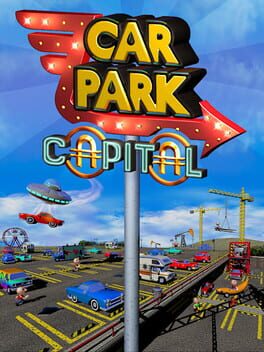
- Verdict
- A management game with a point
- Released
- 9 Oct 2026
- Platforms
- PC, Linux
- Streamer fit
- Simulation specialists, Chat-first, Community-led
- Genres
- Simulator, Strategy, Indie
Long building stretches leave room to talk, and every ugly expansion gives chat an obvious policy to debate.
Bulldozed homes, burning cars, absurd drive-throughs, and protest control all produce a clear setup and punchline.
Different maps, multi-storey construction, production chains, and public resistance support more than one city.
The directory is still small, but unusually strong player interest means it is not an empty category.
Takeaway
Car Park Capital earns a provisional 8/10 Chum score. Its traffic, propaganda, public anger, and stacked concrete disasters turn a management game into a readable argument viewers can join. Early Access balance and interface roughness need patience, but this is one of the clearest missed streams from the 9 October releases.
What is Car Park Capital?
Car Park Capital is a single-player satirical management game from Hilkojj Interactive and MicroProse. Big Auto hires the player to make ordinary towns dependent on cars. That means buying land, demolishing homes, laying out parking spaces and ramps, setting fees, and manufacturing the demand that keeps those spaces full.
The joke is part of the simulation rather than a cutscene around it. Pro-car statues, billboards, megaphones, oil drilling, fast-food production, and drive-through attractions push citizens toward driving. Individual residents have visible thoughts, while traffic, fuel, footfall, parking income, pollution, and public mood turn the campaign into a network of competing pressures.
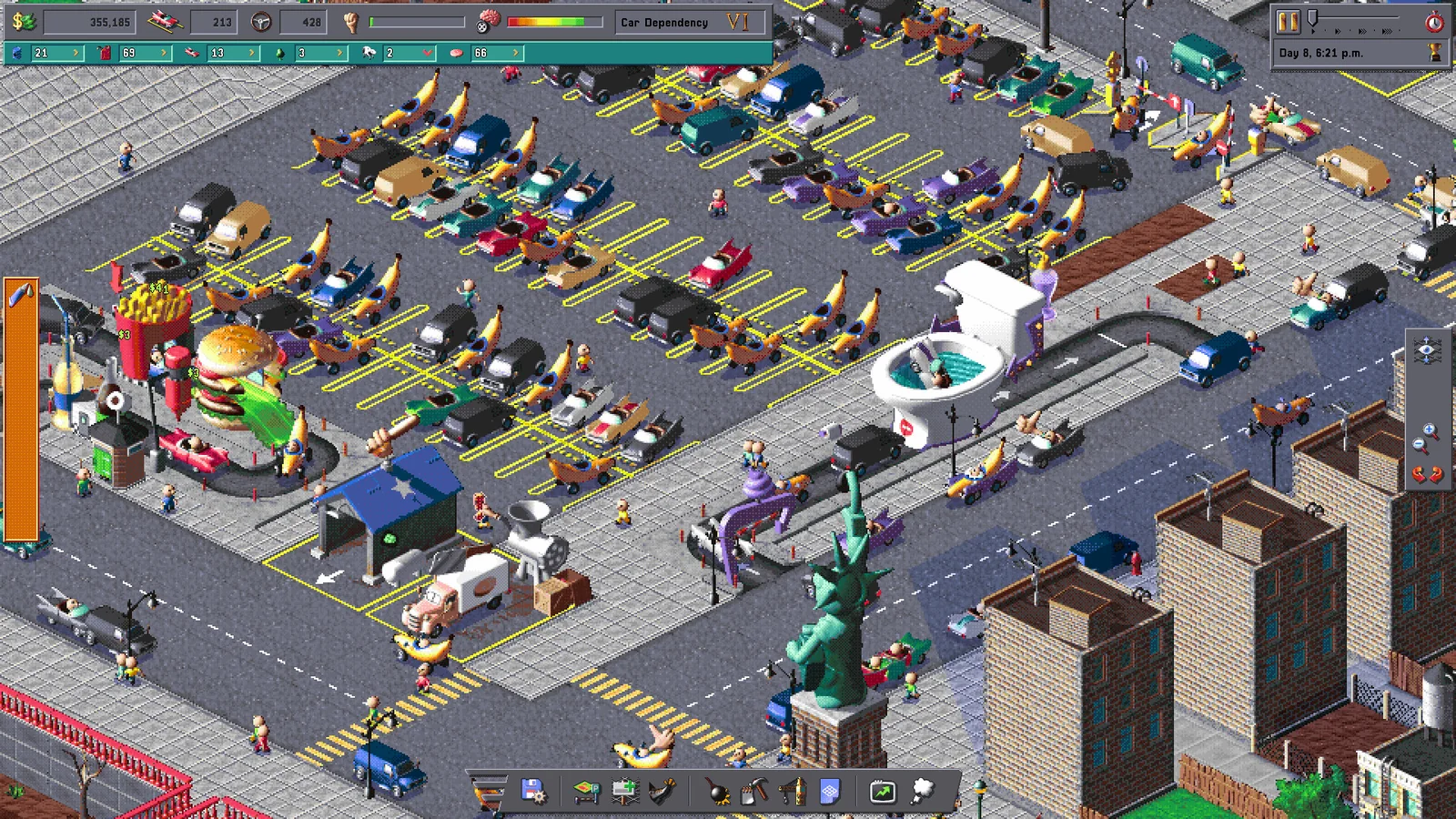
The launch build entered Early Access on 9 October 2026 with three scenarios, including an American city, the Pyramids of Giza, and a drive-through production-chain map. The developer's release announcement describes the project as a former hobby game that became full-time work and asks players to shape updates. The current estimate is roughly ten months in Early Access, aiming for summer 2027. That makes the present scenarios a real release, not a promise of a finished campaign.
How the game has been received
The first player response is exceptionally warm for a two-day-old Early Access game. On 12 October, Steam reported 773 positive recommendations and 21 negative, an Overwhelmingly Positive result from 794 reviews. There is no useful Metacritic or OpenCritic consensus yet, so that enthusiasm should be read as a launch signal rather than a settled critical verdict.
Julian Benson at Rock Paper Shotgun found the satire inseparable from the systems: heatmaps identify land to buy, homes and public transport give way to parking, and car production creates the traffic that pays for expansion. Guilherme Ribeiro at PressAttack praised that premise and its humour while finding the economy easy, the onboarding weak, and later play increasingly dependent on micromanagement. Three scenarios and a young balance model limit long-series confidence even while the underlying loop is landing well.
The Chum score measures streamability. It does not rate conventional game quality. Early Access reception can change quickly.
The streamer verdict
This is management play with a visible moral farce. A host can ask whether to flatten another block, raise fees, distract residents, or deploy riot police, then let chat own the consequences. The city keeps moving while that conversation happens. Even viewers who miss an optimisation detail can understand why a toilet-shaped drive-through surrounded by traffic is funny.
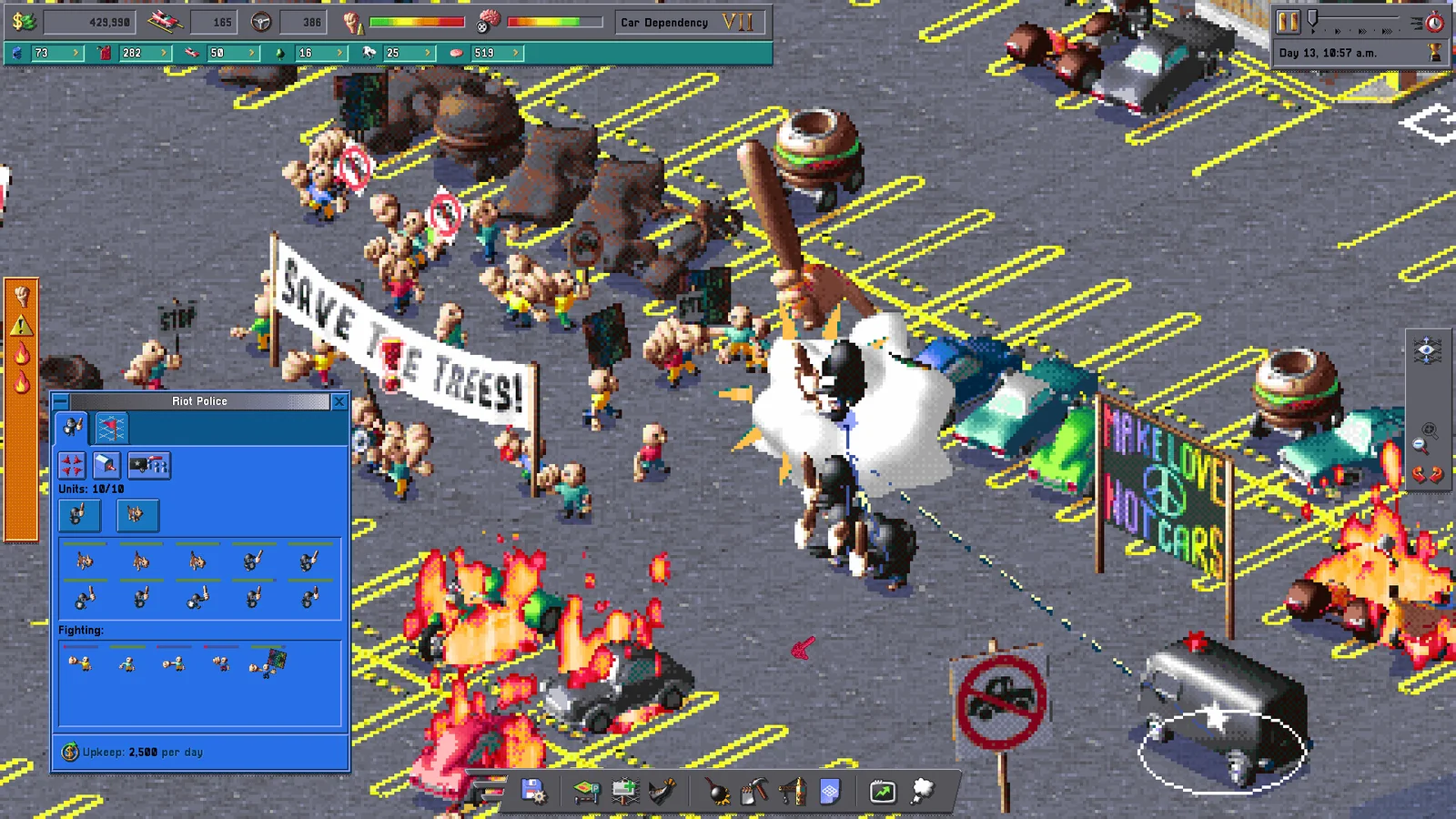
The risk is tempo. A simulation stream can disappear into menus, and this launch build does not always explain why revenue or footfall changed. Narrating the plan matters. If the host silently studies graphs, the same systems that create chat choices become dead air.
Make chat the planning committee
Name each district after one promise to its residents, then put every major expansion to a chat vote. Keep the winning promise visible and measure how quickly the parking plan betrays it. The rule gives each construction phase a story and makes a failed traffic scheme feel like a collective decision.
Final verdict
Car Park Capital earns a provisional 8/10 Chum score. Simulation creators get a readable city, strong audience choices, and clip-ready escalation. The condition is active narration around a young build whose economy and interface still need explaining.