
- Verdict
- A strong chat-led simulation series
- Released
- 13 Oct 2026
- Platforms
- PC, PlayStation 5, Xbox Series X|S
- Streamer fit
- Simulation specialists, Chat-first, Community-led
- Genres
- Simulator, Strategy
Building, naming, animal selection, and management give the host frequent places to explain choices and involve viewers.
Unexpected behaviour, habitat mistakes, births, and finished builds can pay off, although many sessions move gradually.
Campaign work, sandbox zoos, community blueprints, aquariums, aviaries, and reserves support a long schedule.
The sequel has a visible launch, but the specialist simulation audience leaves room for a creator with a clear project.
Critics praise the animals and expanded building systems, while early players are less convinced and micromanagement complaints recur.
Takeaway
Planet Zoo 2 earns an 8/10 Chum score. Its construction tools, animal care, and conservation projects turn chat suggestions into visible changes, while a zoo can support weeks of return streams. The host still has to translate dense management screens into a clear project rather than leaving viewers to watch menus.
What is Planet Zoo 2?
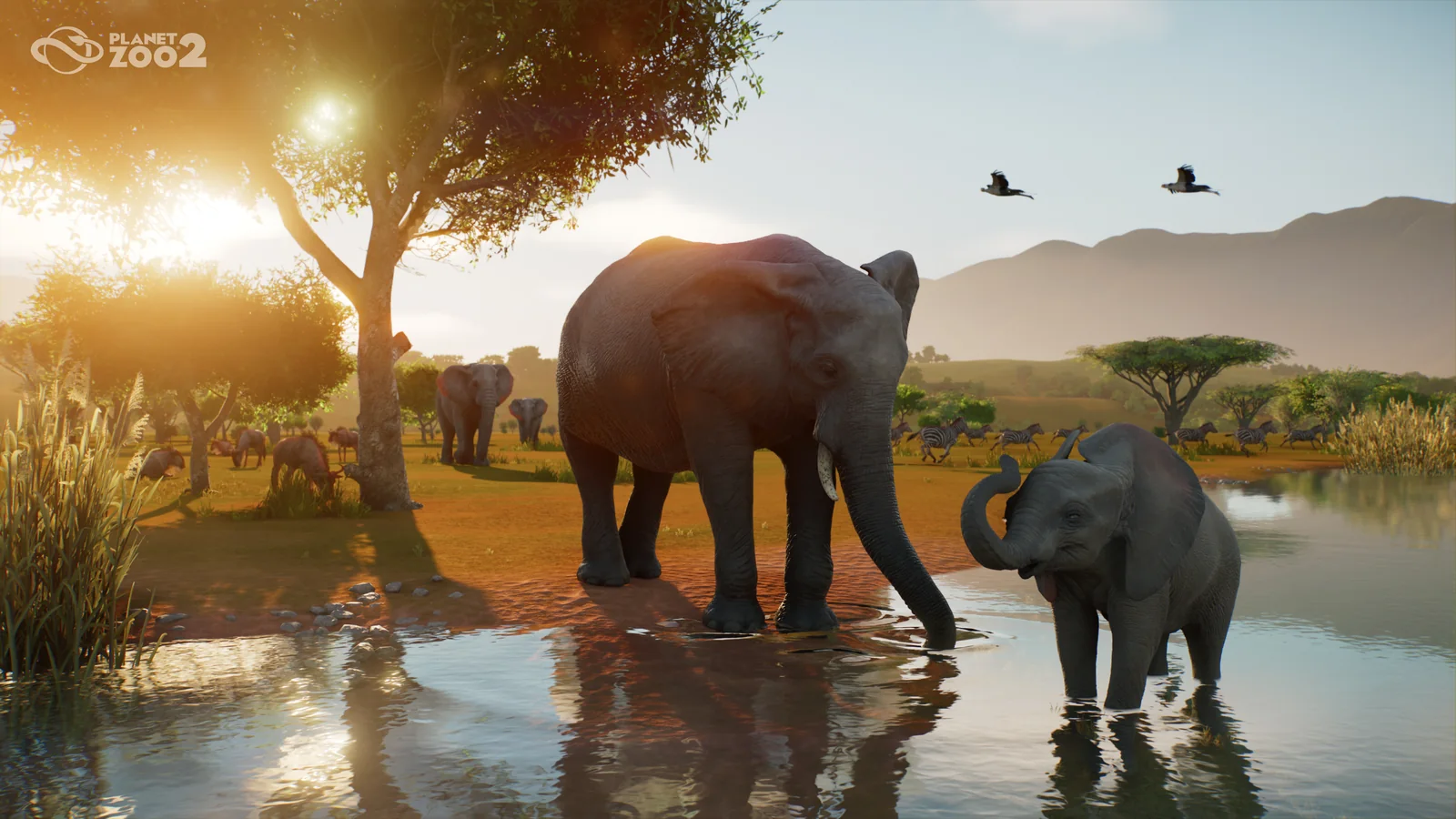
Planet Zoo 2 is Frontier Developments' zoo construction and management sequel. The player designs habitats, brings in animals, hires staff, serves guests, and balances welfare with the money needed to expand. A normal session moves between close animal observation, detailed construction, and the management panels that explain why a habitat or business is struggling.
The sequel keeps the first game's split personality: it is both a creative building tool and a demanding management simulation. Piece-by-piece scenery supports custom habitats, while blueprints let a player place finished structures more quickly. Staff routes, guest needs, education, finances, terrain, barriers, and animal requirements all interact, so a visually attractive zoo still needs to function.
The largest additions are fully aquatic animals, flying birds, and Wildlife Reserves. Frontier says the launch roster includes more than 130 animals. Aquariums and aviaries create new kinds of enclosed habitat, while reserves move conservation beyond the zoo. Players restore a larger environment, meet project requirements, and release suitable animals into it.
For returning players, the meaningful change is breadth rather than a reset. The familiar work of habitat design and zoo economics now covers water, flight, and reserve projects, with easier pathing and broader scaling and colour controls. Newcomers still face a large ruleset, even with guided scenarios, because the appeal depends on learning how animal welfare, staff work, guest flow, and construction fit together.
How the game has been received
The first critical verdict is positive. On 14 October, Metacritic showed an 85 from 15 PC reviews, with 14 positive and one mixed. Reviewers agree that aquatic and flying animals broaden the simulation and that Frontier's animals remain the centre of the experience. IGN praised the expanded mechanics and flexible building, while noting that Wildlife Reserves could have been richer.
The reservations concern friction rather than a weak foundation. PC Gamer found the micromanagement frustrating despite the appeal of the animals, and other launch reviews mention bugs or an overwhelming first impression. Steam showed 72% positive from 524 user reviews on 14 October, a cooler response than the early critic scores. The overall response strengthens the series case, but it also confirms that a stream needs a host who enjoys explaining systems.
The Chum score measures streamability, not conventional game quality. Strong reviews support audience confidence in a long series, while the score still reflects how well the management work reads on a broadcast.
The streamer verdict
This is a natural community project. Viewers can suggest animal names, vote on the next habitat, choose between expansion plans, or submit workshop ideas. Those contributions remain visible in later streams, giving the audience a reason to return and see what changed.
The creator has to protect the stream from its own menus. Adjusting staff zones or comparing financial tables is useful play but weak television when the host does not explain it. State the problem before opening a panel, explain the decision, and return to the animals or construction view once the change is made. A named goal, such as finishing an aquarium or stabilising a reserve, gives each session an ending.
A sensible stream format
Build one persistent zoo with a project board for each stream. Give chat a controlled choice over theme, species, or layout, then spend the rest of the session making that choice work. Reserve the final minutes for an animal walk-through and a preview of the next build.
Final verdict
Planet Zoo 2 earns an 8/10 Chum score. Simulation specialists and chat-led builders can turn it into a durable community series, helped by strong reviews and an unusually broad set of creative projects. It works less well for hosts who do not enjoy narrating management decisions.