
- Verdict
- Co-op discovery with room for chat
- Released
- 13 Oct 2026
- Platforms
- PC, macOS, Xbox Series X|S
- Streamer fit
- Co-op and squads, Chat-first, Discovery-focused
- Genres
- Role-playing (RPG), Strategy, Indie
Camp planning, cooking, puzzles, and route decisions create natural discussion between dangerous encounters.
A trap, bad meal, missed clue, or rescue has a visible cause, although careful searching is less immediately dramatic.
A hand-built world, persistent recipes, tools, camp improvements, and co-op discoveries support a continuing run.
Game Pass and publisher attention provide awareness, while the title is unlikely to be dominated by the largest channels.
Takeaway
Deep Dish Dungeon earns a provisional 7/10 Chum score. Its co-op exploration, camp preparation, and environmental puzzles give a small group clear things to discuss and discover together. Slow, clue-led progress will suit patient creators better than groups expecting constant combat.
What is Deep Dish Dungeon?
Deep Dish Dungeon is a first-person survival exploration game from Behold Studios and Raw Fury. One player or an online group enters a hand-built dungeon, searches rooms and corridors, gathers materials, fights hostile creatures, and returns to a camp to prepare for the next push. The main objective is to understand the dungeon rather than simply clear a sequence of combat arenas.
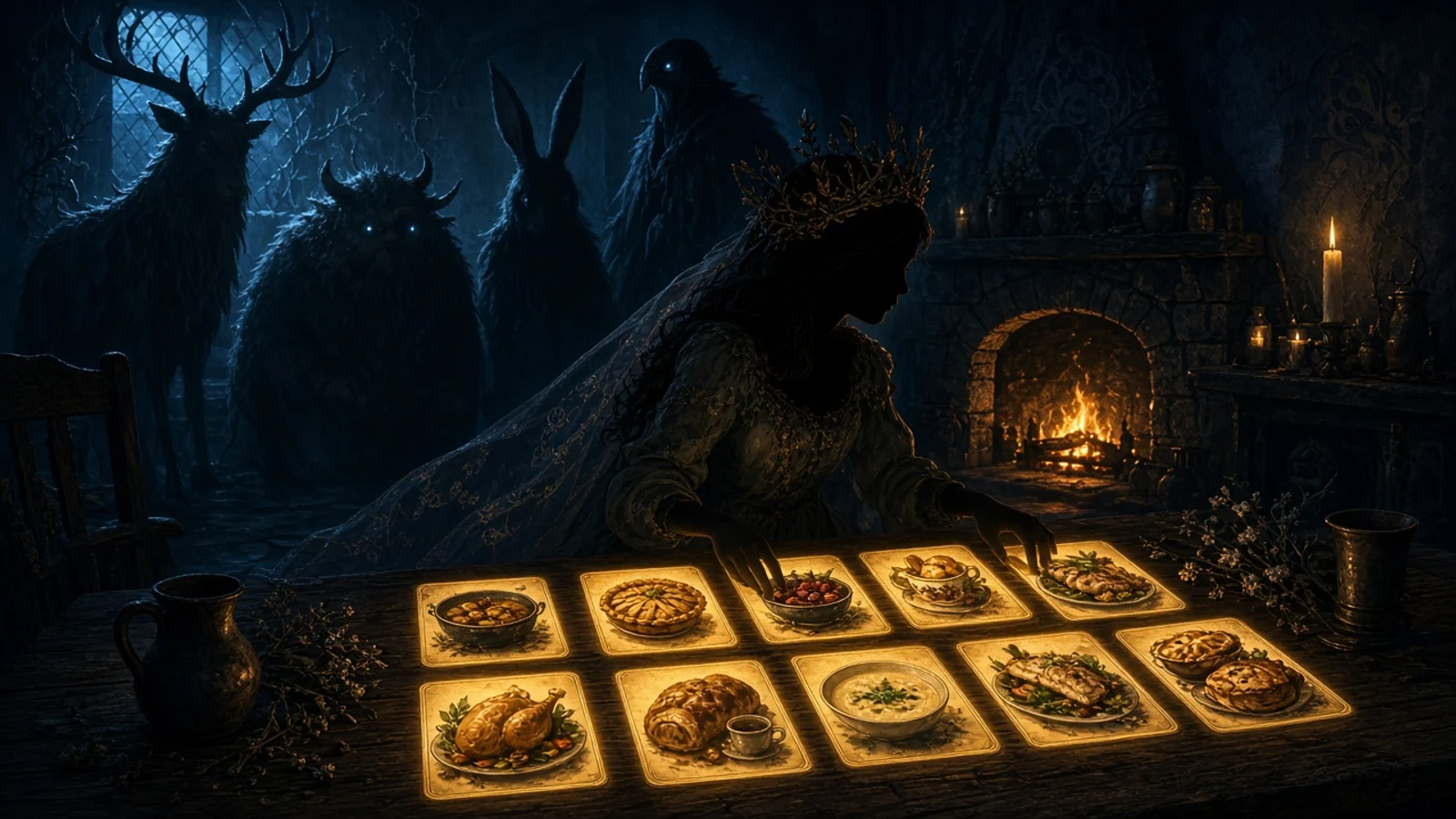
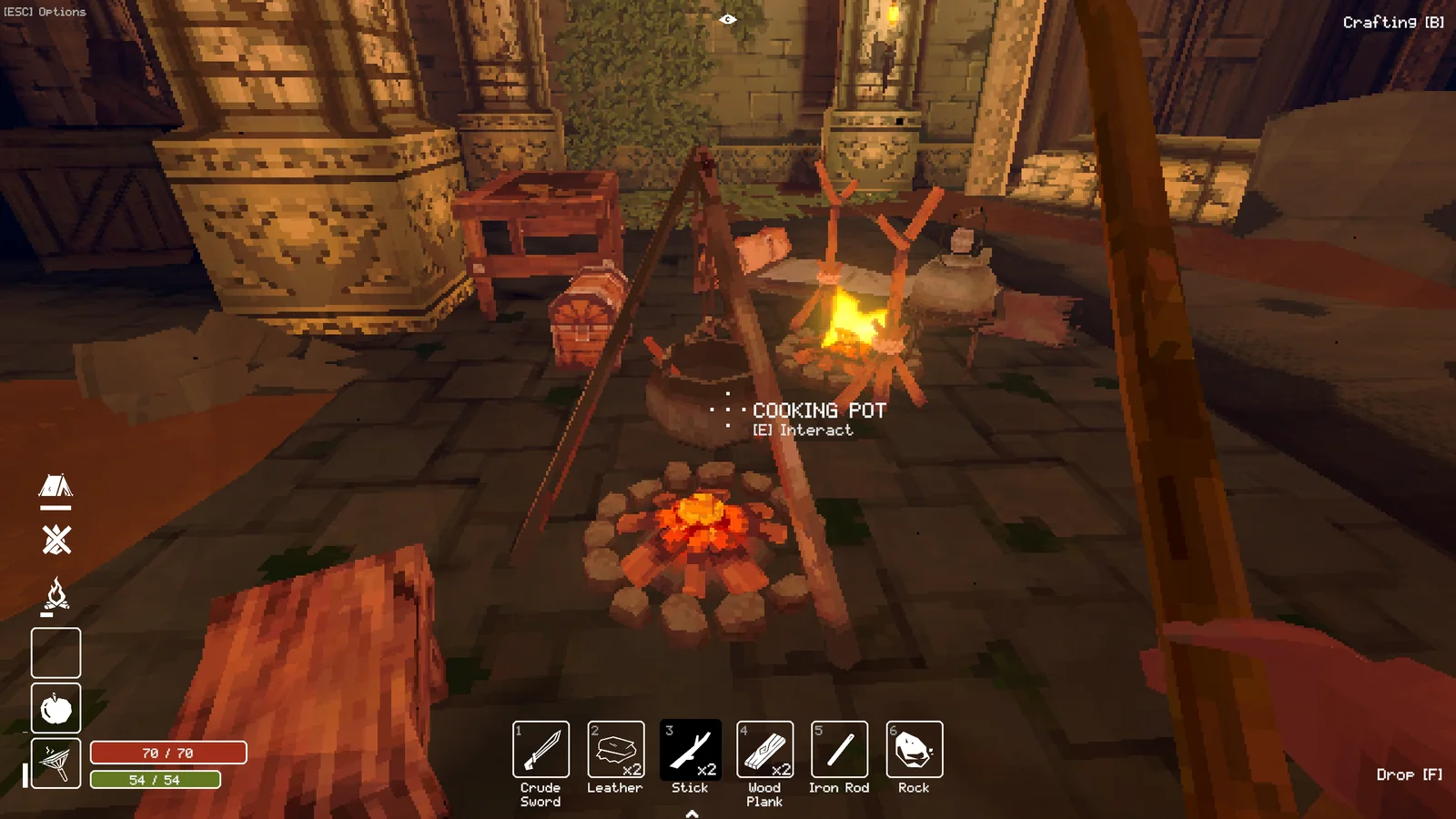
Food is part of progression. Resources found underground become tools and meals, while recipes alter the party's statistics for later expeditions. That makes camp a planning space: decide what to craft, choose what to cook, and use what the last trip revealed to set the next route. The loop ties observation to preparation instead of handing out a conventional level-up after every fight.
The dungeon uses environmental clues, locked routes, puzzles, and enemies with different behaviours. The Steam description explicitly warns that it offers little hand-holding and expects players to slow down and inspect the environment. That puts some metroidvania logic into a first-person survival space: knowledge and the right tool can matter as much as combat strength.
Online co-op supports solo play or up to two friends, for three players in total, working toward the same discovery. The game launched on 13 October 2026 for PC, macOS, and Xbox Series X|S, with Xbox and PC Game Pass access.
How the game has been received
The launch response is promising but too small for a broad conventional verdict. On 14 October, Steam showed 78% positive from 73 reviews. That is enough to spot early approval, but not enough to treat one day of player feedback as stable. Metacritic had no scored consensus, while reviews from DualShockers and TechRaptor offered useful but differing early assessments.
The provisional Chum score therefore combines the documented structure with a sparse launch response rather than a settled quality consensus. Early players may still uncover progression, networking, or pacing problems as groups move deeper into the dungeon.
The Chum score measures streamability, not conventional game quality. Deep Dish Dungeon does not yet have enough independent reception evidence for a Game reception fit score.
The streamer verdict
The strongest broadcast is a group that shares information aloud. One player notices a marking, another remembers a blocked passage, and the camp becomes a short meeting before the next expedition. Viewers can follow that chain even when they missed an earlier stream because the immediate question is concrete: what do we need, and where are we trying to go?
The risk is dead time disguised as authenticity. Searching every wall or debating recipes can stall without a host who summarises the current theory. Agree on who leads navigation, keep a short list of unresolved clues, and use chat for hints only under a stated rule. That preserves discovery without turning the broadcast into an argument over directions.
A sensible stream format
Use two- or three-hour expedition sessions with the same group. Begin at camp by recapping one goal, stop after a meaningful discovery or camp upgrade, and keep a shared clue board between streams. Clip rescues and failed plans rather than isolated attacks, since the group's coordination is the real story.
Final verdict
Deep Dish Dungeon earns a provisional 7/10 Chum score. It has a useful structure for patient co-op creators: preparation creates chat space, discoveries give episodes a purpose, and mistakes can become highlights. Sparse launch evidence means the recommendation should be revisited once more groups have tested the full dungeon.