- Verdict
- A chat-friendly folklore deckbuilder
- Released
- 13 Oct 2026
- Platforms
- PC, macOS, Linux
- Streamer fit
- Chat-first, Community-led, Discovery-focused
- Genres
- Strategy, Turn-based strategy (TBS), Adventure, Indie
Turn-based encounters, route choices, and deck changes give the host time to explain options and read suggestions.
Large flavour chains, unusual folklore creatures, comic dialogue, and bespoke failures can pay off without constant action.
A persistent story campaign, eight biomes, recipe unlocks, modifiers, and shorter Banquet runs offer distinct reasons to continue.
Deckbuilders are crowded, but cooking for British and Irish folklore creatures gives the stream an identifiable angle.
Steam sentiment is strongly positive and reviews like the core idea, but most critic evidence predates the finished release.
Takeaway
Hungry Horrors earns an 8/10 Chum score. Its turn-based meals give chat time to debate recipes, learn a creature's tastes, and shape a run, while the campaign and shorter Banquet mode support different stream lengths. Strong Steam sentiment helps the case, although limited criticism of the finished 1.0 build keeps reception from carrying more weight.
What is Hungry Horrors?
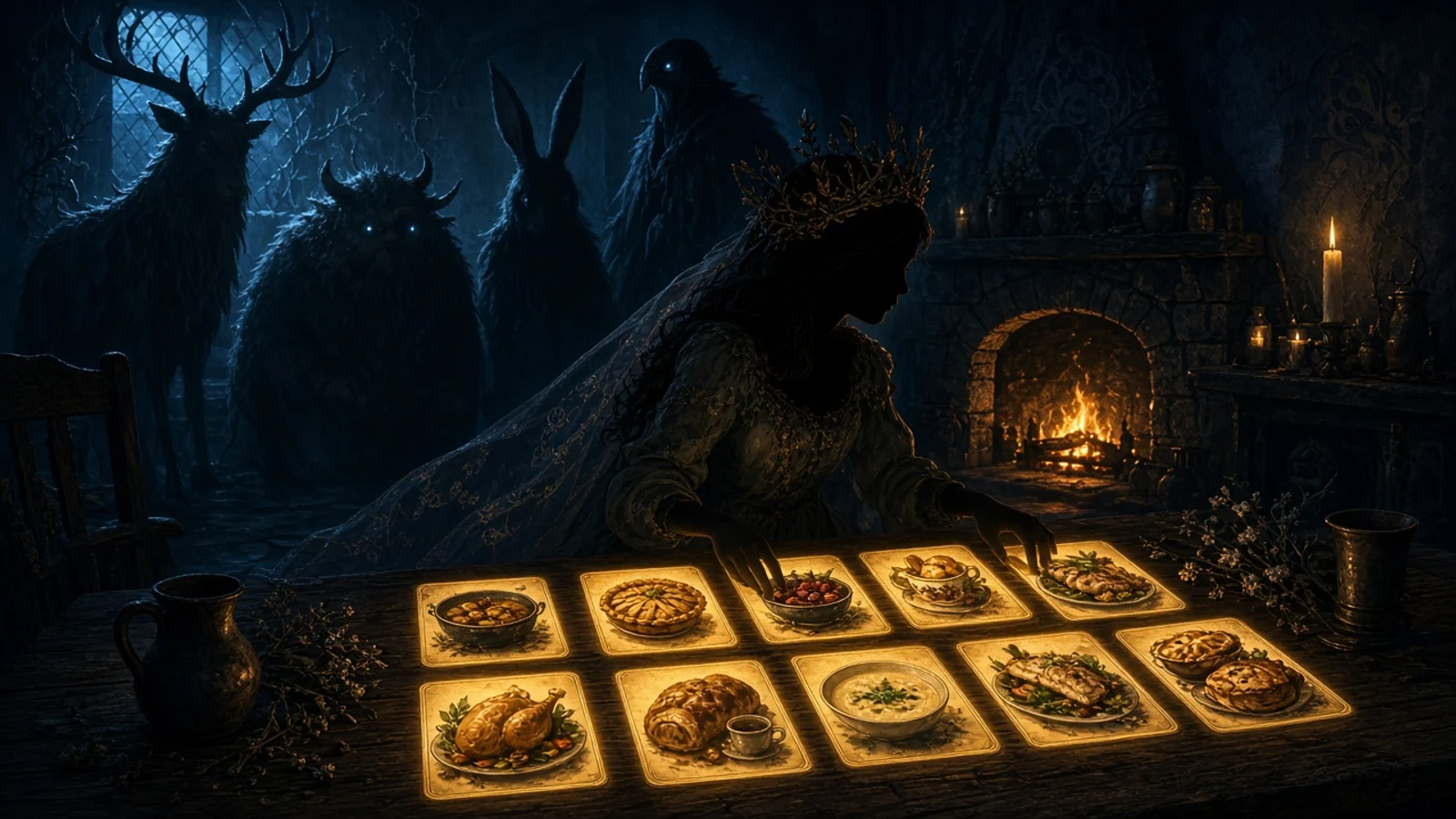
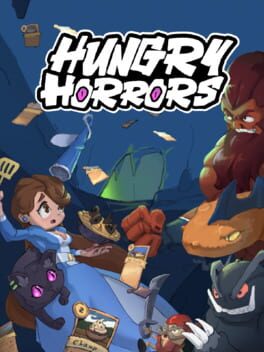
Hungry Horrors is a single-player roguelite deckbuilder in which cooking replaces combat. You play a spoiled princess crossing a cursed version of the British Isles with a recipe book and a sarcastic cat. Folklore creatures block the route, and the objective in each encounter is to fill their hunger with dishes before they reach the princess and make her the next course.
Every dish is a card with one of five tastes: sweet, savoury, sour, salty, or bitter. A Horror has preferences and hatreds, so the player reads its response, builds craving chains, and orders cards to increase the amount of hunger each meal satisfies. Seasonings alter dishes, while cookware, potions, and artefacts change the rules around the deck. Failure does not produce a conventional battle defeat; each creature has its own animated way of eating the princess.
Travel connects those encounters. The princess moves through biomes, meets figures from regional legends, trades with merchants, completes quests, fishes for ingredients, and finds equipment that reshapes later choices. The completed 1.0 release contains eight biomes, 34 Horrors, 62 dishes, and 13 legendary characters. Its Campaign carries unlocked recipes, abilities, and seasonings between runs through the Book of Taliesin progression system, so a failed expedition can still expand the next attempt.
Campaign offers Vanilla and Spicy difficulty plus additional modifiers for a longer story-led structure. Banquet removes that long arc in favour of a shorter, harder roguelike run with its own difficulty levels. Hungry Horrors began Steam Early Access on 19 January 2026 and reached full 1.0 on 13 October for Windows, macOS, and Linux; it is also Steam Deck Verified. There is no multiplayer mode, so audience participation comes through decisions rather than shared control.
How the game has been received
Reception is positive, but criticism of the finished release is not yet broad. OneUpNerd reviewed the 1.0 build after 17 hours and praised its non-violent premise, length, and ability to engage someone who did not usually favour deckbuilders, while noting awkward external-controller navigation in the skill tree. Earlier Early Access reviews from Digital Chumps and Try Hard Guides liked the repeatable cooking system, writing, and creature design, with the opening learning curve and incomplete scope as their main qualifications.
Steam provided the broadest player signal on 14 October: 265 of 270 lifetime recommendations were positive, producing a Very Positive label. Those reviews include the Early Access period, so they cannot isolate the final campaign and balance changes. Metacritic still had no score and only two critic entries. The available evidence supports a clearly positive reception score, but the lack of several independent 1.0 reviews prevents a stronger consensus claim.
The Chum score measures streamability, not conventional game quality. Hungry Horrors benefits from positive player sentiment, while its turn-based chat space and campaign structure do most of the work in the broadcast verdict.
The streamer verdict
Hungry Horrors gives chat useful questions at a comfortable pace. Viewers can remember that a creature hated a bitter dish, argue over which recipe should receive a seasoning, or help choose the next route. Because each suggestion changes a visible card or destination, audience input can feel connected to the run instead of becoming a general request to grind.
The host still needs to translate the board. Taste icons, card text, cookware effects, and persistent upgrades can become dense at stream size. Reading every tooltip aloud would stall the programme, so the better approach is to name the current craving, explain the two credible plays, and let chat choose between them. That keeps the folklore and food visible instead of burying both under arithmetic.
Its horror is more playful than ROLLA's gore, but it should not be sold as consequence-free cosy cooking. The princess can be eaten in 33 different death animations, and several creatures come from darker regional stories. Those failures can become clips for an audience comfortable with comic peril, while the lack of direct combat makes the ordinary turn-to-turn action easier to discuss.
A sensible stream format
Use Campaign for a recurring chat-led series, with one biome or major unlock as the session target. Give regular viewers ownership of a few recurring decisions, such as naming the preferred flavour chain or choosing a modifier. Keep Banquet for shorter challenge streams once the audience understands the dishes, since its standalone runs offer a cleaner start and finish.
Final verdict
Hungry Horrors earns an 8/10 Chum score. It is best for chat-first, community-led, and discovery-focused creators who enjoy explaining a strategy without rushing the audience. Positive reception strengthens the recommendation, but the real advantage is structural: each turn creates a decision, Campaign gives viewers a reason to return, and Banquet provides a shorter format when a full story run is too large.