
- Verdict
- A promising mobile hunting series with conditions
- Released
- 29 Oct 2026
- Platforms
- iOS, Android
- Streamer fit
- Co-op and squads, Challenge runners, Community-led
- Genres
- Adventure
Gathering, crafting, and facility planning leave room to talk, while large-monster fights demand close attention on a small screen.
Monster attacks, broken parts, team recoveries, and final blows give each hunt understandable danger and resolution.
Aesoland exploration, eight launch weapon types, Adventurer development, co-op hunts, and continuing events support repeat sessions.
Monster Hunter recognition helps explain the stream, but mobile viewing interest and established franchise channels divide attention.
Takeaway
Monster Hunter Outlanders earns a provisional 7/10 Chum score. Large-monster hunts still provide clear stakes, co-op rescues, and satisfying finishes, while Aesoland preparation can give chat a role between fights. Mobile capture, dense progression, and an unformed full-release reception record make this a promising but conditional series.
What is Monster Hunter Outlanders?
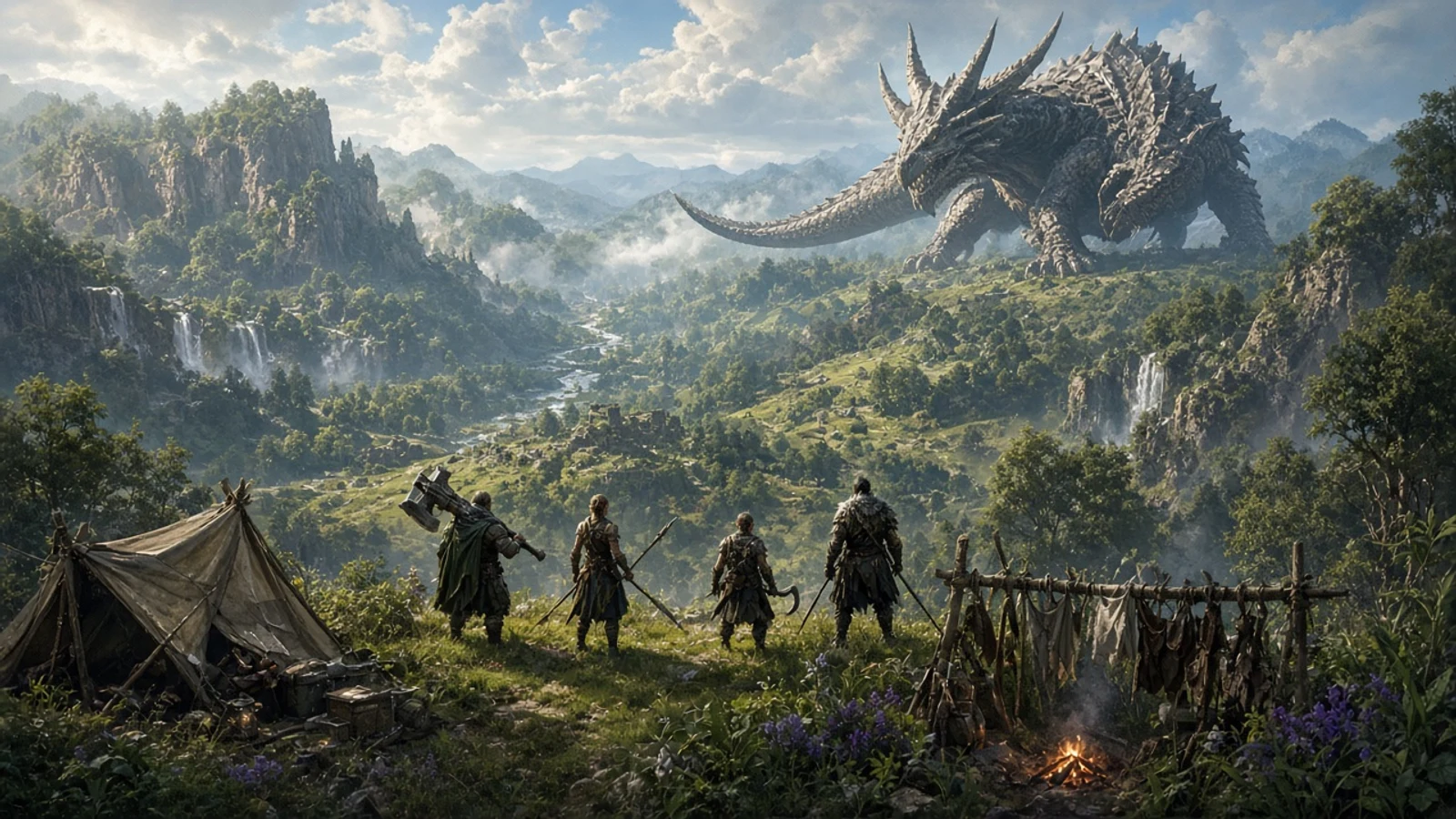
Monster Hunter Outlanders is a free-to-play third-person hunting action game for iOS and Android. The player creates a Fated Adventurer, explores the island of Aesoland, gathers materials, prepares equipment and field facilities, then confronts large monsters alone or in a party of up to four. A normal session moves between reading the landscape, collecting what the next expedition needs, setting up a route, and committing to a hunt where positioning and the monster's attack patterns matter.
A successful hunt feeds the next one. Monster materials support weapon and equipment crafting, while named Adventurers and Buddies add their own skills and development paths. Palicos fight, Rutacos help with tools and building, and Trillans provide support. Field facilities and traversal devices turn preparation into something visible in the world rather than leaving every decision in a menu.
The launch version has eight weapon types: Great Sword, Long Sword, Dual Blades, Hammer, Lance, Charge Blade, Heavy Bowgun, and Bow. Each named Adventurer pairs a weapon with distinct follow-up actions, which shifts some progression from the mainline series' hunter-and-gear model toward character development. The official launch announcement also confirms story exploration, Free Hunt, equal-stat Arena matches, solo play, four-player parties, seasonal events, and recruitable Adventurers and Buddies.
Two control schemes define how the series has been adapted for phones. Adventure controls reduce the number of actions and add clearer attack warnings, while Classic controls expose more inputs and remove some guidance. Outlanders is therefore a fuller exploration-and-hunting game than the location-based Monster Hunter Now, but it is also a licensed TiMi Studio Group spin-off under Capcom supervision, with free-to-play character recruitment and event systems shaping its progression.
How the game has been received
Broad full-release reception cannot yet be assessed. On 30 October 2026, Metacritic listed one iOS review at 76, below the four-review threshold for a Metascore. The US App Store showed 4.8 out of 5 from about 1,000 ratings on the same date, an encouraging early signal that remains vulnerable to launch enthusiasm and rapid change.
The available longer coverage mostly concerns test or pre-release builds. Game8's closed-beta review and The Nerd Stash's pre-launch hands-on found a recognisable hunting core and an accessible mobile adaptation, while raising concerns about story focus, grind, currencies, and character systems. Pocket Gamer's launch-day comparison explained how Adventure and Classic controls differ, but did not present a full final-build verdict. None of that evidence is broad enough for a Game reception card.
The Chum score measures streamability, not conventional game quality. Monster Hunter Outlanders remains provisional until more independent reviewers assess the final build, progression economy, and longer-term hunt variety.
The streamer verdict
Monster Hunter's basic broadcast language remains useful here. A monster has recognisable attacks, the party prepares for a target, damage changes the situation, and the hunt ends in success or a failed recovery. New viewers can understand the broad stakes even when they do not know a weapon's combo route or the purpose of every material.
The best chat space sits on either side of the fight. Viewers can help choose a weapon, Buddy, route, facility, or next target while the streamer explains what the team needs. During a hunt, the host should prioritise the phone screen and party communication. Touch controls make frequent chat glances more disruptive than they would be with a separate controller and monitor.
A clean capture matters. Phone notifications, heat, battery drain, aspect ratio, and text size can all affect the broadcast even when the game itself runs correctly, so the streamer should test the capture path before promising a series. Free-to-play recruitment and event rewards also need plain explanation. Opening characters can be a segment, but spending should never become the only visible progression.
Give each hunt a purpose
Begin with one target and explain what its materials will unlock or improve. Let chat choose between two useful preparations, keep menu cleanup outside the main segment when possible, and finish on the resulting craft or development step. In co-op, assign one person to state the plan so four voices do not bury the monster's readable setup and payoff.
Final verdict
Monster Hunter Outlanders earns a provisional 7/10 Chum score. It best suits mobile-first action creators and established hunting groups who can make preparation legible and keep free-to-play systems from taking over the broadcast. Strong hunt structure and deep repeat potential support a series, while capture friction and missing final-build consensus keep the score conditional.