- Verdict
- A lively rhythm challenge with conditions
- Released
- 15 Oct 2026
- Platforms
- PC, PlayStation 5, Xbox Series X|S, Nintendo Switch 2
- Streamer fit
- Challenge runners, Co-op and squads, Discovery-focused
- Genres
- Music, Role-playing (RPG), Strategy, Adventure
Build and route choices invite discussion, but commands require the host to listen and respond in rhythm.
A recovered rhythm, screen-filling attack, or boss finish has an immediate audiovisual payoff.
Roguelite upgrades, four chapters, bosses, and co-op give creators several reasons to return.
Its Patapon lineage draws attention, while the unusual rhythm format avoids the largest action categories.
Reviews like the central idea, but recommendation rates and recent Steam sentiment show meaningful reservations.
Takeaway
Ratatan earns a 7/10 Chum score. Rhythm commands, a marching army, and online co-op give the screen a strong identity and make victories easy to clip. The same beat limits conversation, while the cooler response around version 1.0 makes this a conditional series rather than a universal recommendation.
What is Ratatan?
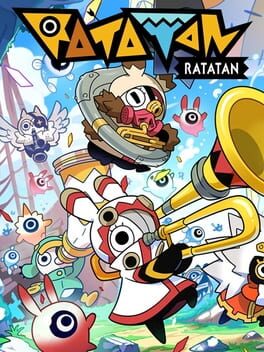
Ratatan is a rhythm roguelite in which a Ratatan leader commands a crowd of small Cobun followers. The player enters short button patterns to order the group forward, defend, or attack, then keeps the beat while the army collides with enemies across a side-view route.
Each run combines timing with preparation. Commands determine what the army does now, while character choices, equipment, and random rewards determine what it can survive later. Missing the rhythm breaks momentum. Holding it builds towards larger skills and turns a busy screen into a coordinated push.
The game comes from Ratata Arts and includes key creators associated with Patapon, so the musical command structure is deliberate lineage rather than a loose comparison. Ratatan expands that idea with roguelite runs, larger crowds, more elaborate effects, and online co-op for up to four players.
Version 1.0 arrived on 15 October after Early Access. The official launch announcement added chapters three and four, completed the main story, assembled the full Dark Ratatan roster, and brought the game to PC, PlayStation 5, Xbox Series X|S, and Nintendo Switch 2.
How the game has been received
Reception is positive but qualified. On 20 October, OpenCritic showed a 76 average with 54% recommending it. Nintendo Life and DualShockers both found plenty to like in the rhythm-led battles, while also identifying repetition and readability problems.
Steam remained positive overall at about 86% across nearly 1,000 English reviews, but recent sentiment had fallen to roughly 42% across 133 reviews at the check. That divergence limits the Chum score. The core loop has a real audience, yet version 1.0 has not convinced every returning player that balance and progression are where they need to be.
The Chum score measures streamability, not conventional game quality. Reception limits this recommendation because a run-based series depends on viewers and the host wanting to return.
The streamer verdict
Ratatan looks and sounds different from a conventional action game. Viewers can follow the command pattern, hear a mistake, and see the army lose formation. That clarity makes improvement satisfying even when the battlefield itself becomes crowded.
Conversation has to respect the music. A host who reads chat during every pattern will either miss commands or talk over the feature that makes the game interesting. Use preparation screens, reward choices, and the space between encounters for discussion, then let the rhythm take priority.
A sensible stream format
Build the series around complete runs with one viewer choice before departure, such as the leader or a major upgrade. Co-op works best with a group that can keep voice chat concise during command sequences and save the banter for recovery.
Final verdict
Ratatan earns a 7/10 Chum score. Music, co-op, and challenge creators get a memorable screen and strong payoff moments. The recommendation depends on disciplined commentary and a willingness to stop if the current progression problems make repeated runs feel less inviting.