- Verdict
- A sharp horror event built for reactions
- Released
- 29 Oct 2026
- Platforms
- PC, PlayStation 5, Xbox Series X|S
- Streamer fit
- Horror and reactions, Challenge runners, Story-first
- Genres
- Adventure, Indie
Notes and route finding open brief conversations, while parkour and pursuit sequences need uninterrupted attention.
A creature entering the route turns movement into a clear escape attempt with failure or relief at the end.
Story discoveries and movement mastery support a few sessions, with limited return value after the routes and scares are known.
Dinosaur pursuit and parkour provide an understandable hook outside the largest horror launches.
Critics and Steam reviewers favour the movement and atmosphere, while later pacing and imprecise sliding draw criticism.
Takeaway
Terrible Lizards earns a 7/10 Chum score. Weaponless dinosaur chases turn first-person parkour into clear reaction clips, while quieter exploration gives the streamer a mystery to carry between escapes. The campaign looks better as a focused horror event than a long series.
What is Terrible Lizards?
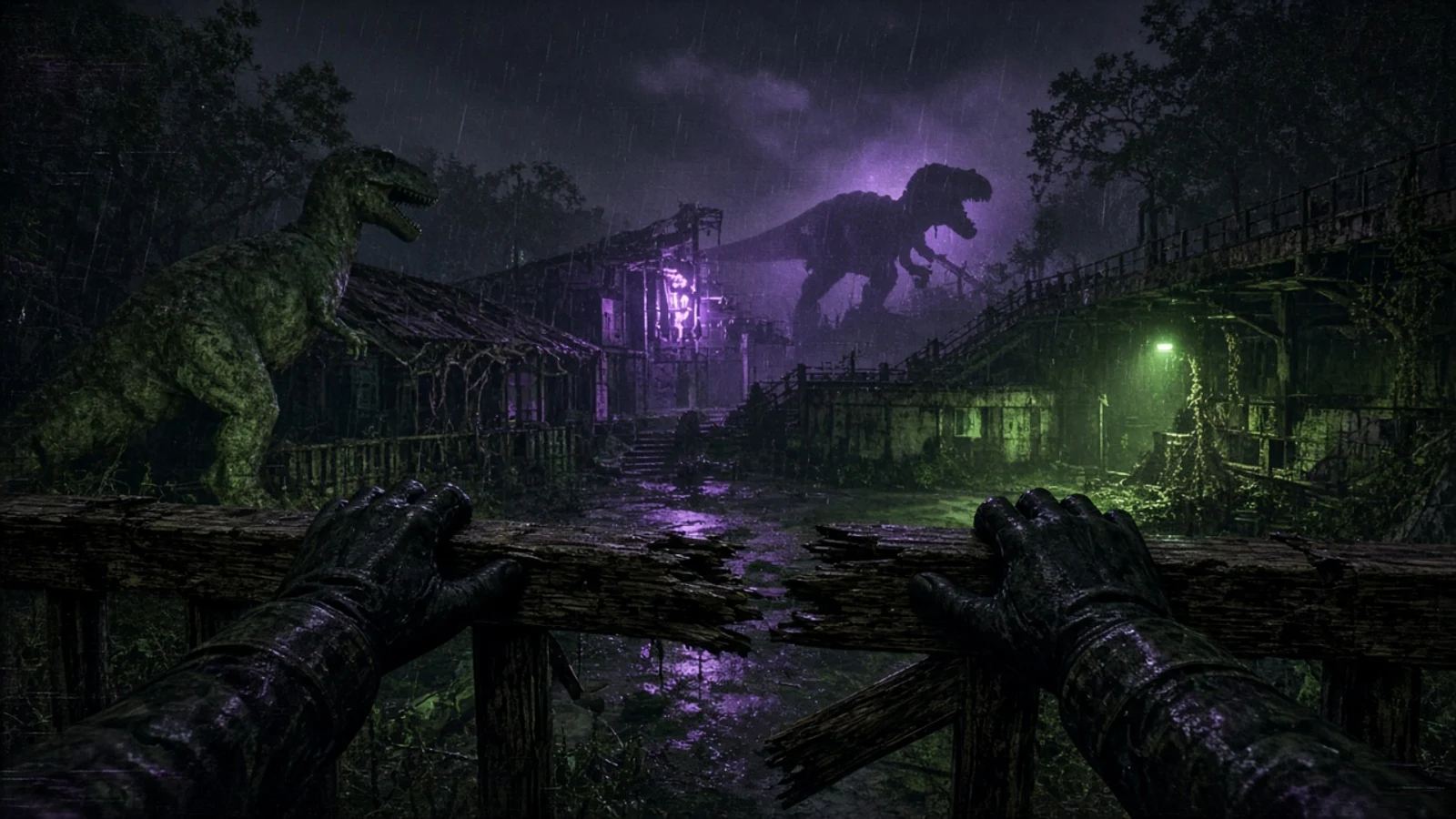
Terrible Lizards is a first-person horror platformer set at Dalton's Dinos, an abandoned Route 66 attraction in 1992. After a car breakdown, Jordan enters the park to look for a missing child. The place contains no usable weapons, so every hostile encounter becomes a problem of route choice, timing, and movement.
A normal section asks the player to read the environment, restore a system or find a path, then run, jump, climb, wall-run, bounce, and slide through it when pursuit begins. Creatures are faster on open ground, which makes railings, walls, platforms, and sharp changes of direction the real defensive tools.
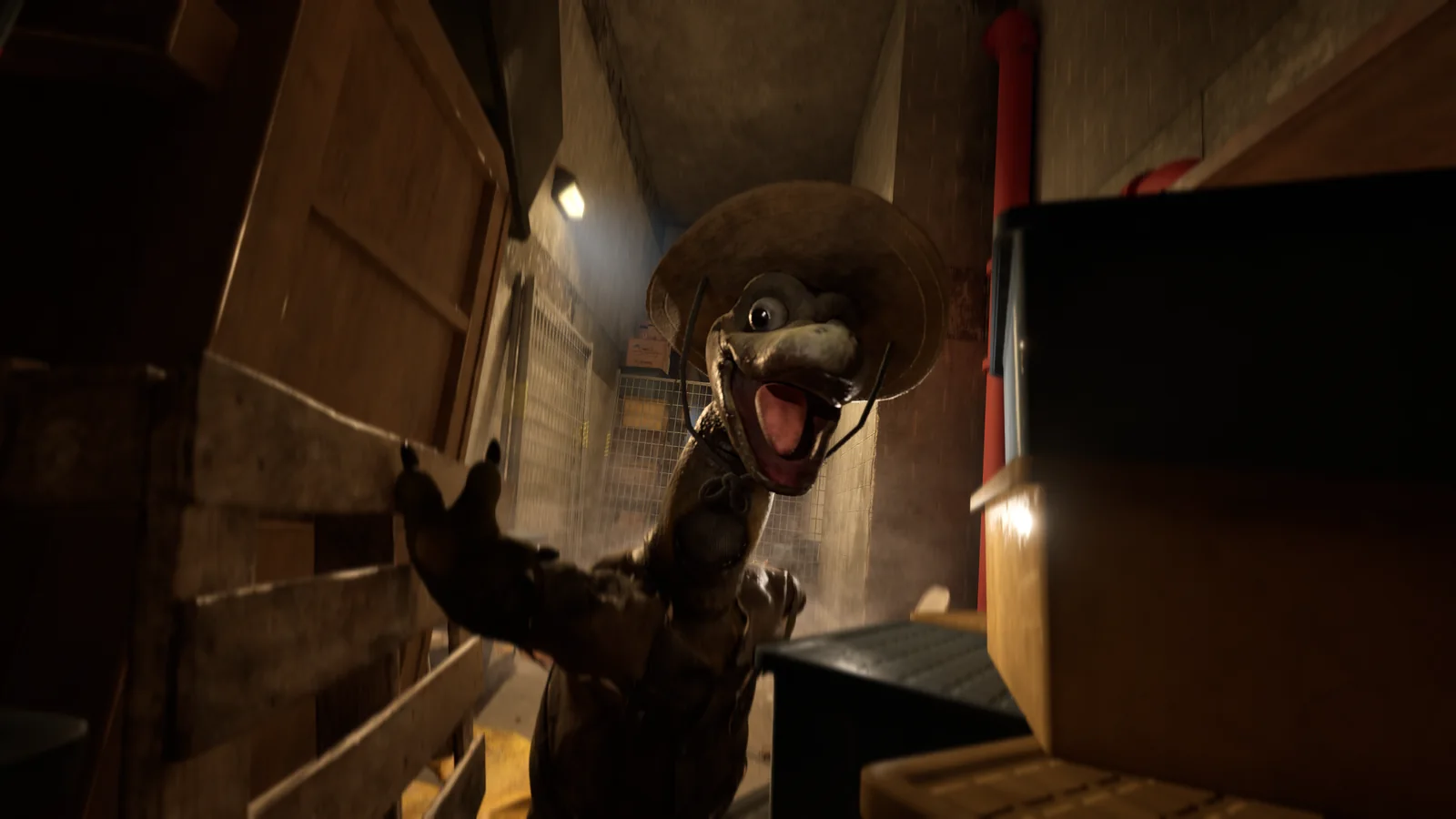
Tapes, notes, and recordings explain what happened to the attraction and why the search continues below it. Slower investigation therefore serves two jobs: it advances the story and teaches the geometry that may become an escape route. The contrast between observation and sudden movement defines the campaign.
This is WDR Studios' debut rather than part of an established series. The developer's release overview explains how the team used a roadside dinosaur park and 1990s presentation to make recognisable creatures feel wrong before the chase begins. Movement mastery, rather than combat or resource conservation, is the distinguishing horror system.
How the game has been received
Early reception is positive but not yet broad. On 30 October, Metacritic showed a 78 from four PC reviews, while Steam showed 84% positive from 126 recommendations. Noisy Pixel praised the parkour, atmosphere, and chase design while finding the leads and ending underdeveloped. The Wand Report liked the clear movement routes and early park setting but criticised sliding precision, repetitive caves, and uneven later pacing.
The shared positive case is the part that matters most on a stream: movement is readable, the park establishes tension, and pursuit provides an immediate payoff. The criticisms suggest that slower underground stretches may need more active hosting and that a failed slide can feel less fair than a route-planning mistake. The response supports a recommendation, with the small critic sample keeping it measured.
The Chum score measures streamability, not conventional game quality. Positive early reception supports the horror-event format, while campaign length and limited chat space cap the live recommendation.
The streamer verdict
This game understands the shape of a reaction clip. The player sees or hears the threat, commits to a route, and either escapes or gets caught. Viewers do not need a long explanation to understand why a missed wall-run matters.
The host should do the explanatory work before the chase. Read important notes aloud, state the suspected route, and tell chat when help is welcome. During pursuit, ignore messages and let the movement carry the broadcast. Repeatedly looking away from the route will turn a frightening sequence into the same avoidable failure.
Keep it to a horror weekend
Plan two or three sessions rather than promising a long-running campaign. End a stream after a major escape or location change, then begin the next with the evidence gathered so far. A later challenge run can work if the audience becomes interested in cleaner routes or faster times.
Final verdict
Terrible Lizards earns a 7/10 Chum score. Horror and challenge creators get strong reactions, readable escapes, and a distinctive setting backed by positive early reception. It has less chat space and series depth than the best long-form horror games, but it should make an effective focused event.