 7
7Streamer review
Intravenous 3: Borderline
A free two-mission tactical prologue turns stealth routes, loud improvisation, and self-imposed rules into a sharp one-stream challenge.
- Verdict
- Excellent tactical one-shot
- Released
- 2 Oct 2026
- Platforms
- PC
- Streamer fit
- Challenge runners, Discovery-focused, Competitive
- Genres
- Shooter, Simulator, Strategy, Adventure
Planning supports discussion, while stealth execution and lethal fights demand attention.
A clean infiltration, sudden detection, or improvised firefight has an immediate setup and payoff.
Two missions support reruns and challenge routes, but this prologue is better as a focused event.
The free prologue has interest without the directory pressure of a major tactical shooter launch.
Steam players broadly recommend the free prologue, with the small scope remaining the main qualification.
Takeaway
Intravenous 3: Borderline earns a 7/10 Chum score. A tactical stealth sandbox with loud alternatives creates strong clips and clear challenge runs, and the free entry point makes a one-stream event easy to pitch. Its two-mission scope sharply limits series value.
What is Intravenous 3: Borderline?
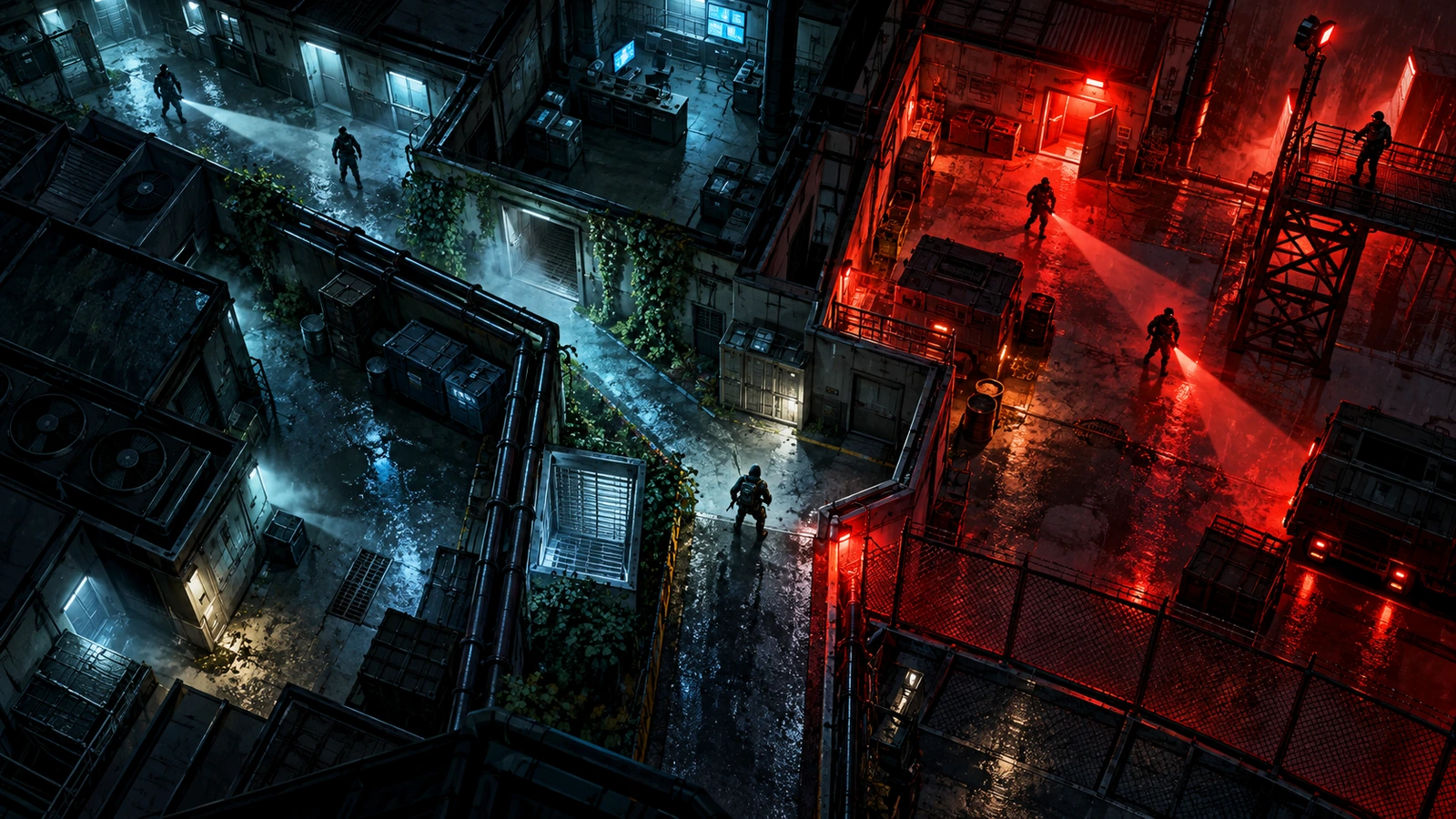
Intravenous 3: Borderline is a top-down tactical stealth shooter in which you infiltrate two enemy-held locations, either slipping past guards or dealing with them in fast, lethal firefights. Light, sound, doors, sight lines and weapon choices determine whether a plan stays quiet or collapses into violence. It is a free standalone prologue rather than the full third game, built to introduce the sequel's systems in two missions rather than tell a complete campaign-sized story.
Each level can be treated as an infiltration problem or a shooting gallery, but the game is most interesting in the space between those extremes. Darkness hides movement, noise pulls guards out of position, doors and sight lines create opportunities, and a suppressed plan can collapse into a loud fight. Gadgets and weapon customisation let the player decide how much preparation to trade for raw force, while enemies respond to what they hear and see rather than waiting in one fixed solution.
Because there are only two missions, progression is mostly knowledge. A first run teaches patrols and failure points; another can impose a different rule, entry route or loadout and reveal how flexible the same rooms really are. Borderline is therefore best understood as a compact systems showcase with replay value, not a miniature story epic. It gives existing players a bridge to the sequel and newcomers a low-cost way to decide whether the series' particular blend of patience and brutality works for them.
How the game has been received
Independent critic coverage is sparse, but the available player sample is useful for this free prologue. By October 6, Steam reviews were strongly positive across more than two hundred responses. The praise supports the tactical freedom and replayable encounters, while the two-mission scope prevents that approval from becoming evidence for a substantial full game.
The Chum score measures broadcast fit. It is not a score for weapon feel, enemy behaviour, difficulty, or the quality of the full Intravenous 3. Independently sourced reception is one factor in the broadcast verdict.
The streamer verdict
Treat Borderline as a compact challenge night, not a new forever game. Decide whether the first run is blind, stealth-first, or deliberately loud, then state the rule before the mission begins. The audience can understand the attempt without already knowing the series.
Planning creates chat space, but execution does not. Read suggestions before entering a room, choose the route, and then let the encounter play. Trying to run a live vote during a lethal fight will make both the action and the conversation harder to follow.
Two missions can still produce different shows
The official Steam page calls Borderline a free standalone prologue with two missions. It documents darkness, sound, distractions, gadgets, weapon customisation, reactive enemies, and the choice between stealth and direct gunplay. That is enough systemic range for multiple approaches, even if the total campaign is short.
A second run should change the rule, not just repeat the route. Ghost the mission after a loud clear, restrict gadgets, or set a no-reload condition. The contrast is what gives the replay a reason to exist on stream.
Keep the violence and language in view
The developer's mature-content note lists violence, implied drug use, swearing, and crude language. That is not an automatic problem for a stream, but it affects audience expectations, sponsorship fit, and which moments are suitable to clip outside the live context.
Formats worth trying
Ghost, then chaos
Run one mission with a strict stealth rule and the other with an aggressive approach. The contrast gives the stream an obvious second act.
Chat picks the entry plan
Present two viable routes before the mission and let viewers choose one. Once the run starts, the streamer owns the moment-to-moment decisions.
The detection review
After a failed stealth section, replay or describe the exact moment the plan broke. It turns a reset into analysis instead of dead time.
Final verdict
Intravenous 3: Borderline is a 7/10 Chum game for tactical creators and challenge runners who want a sharp one-shot. Its choices produce better live stories than its length suggests. The condition is to arrive with a rule, because two missions cannot carry an open-ended series by themselves. The positive player response supports the 7/10 Chum score, while the prologue's limited scope still caps its series value.