- Verdict
- A deep board that needs explaining
- Released
- 8 Oct 2026
- Platforms
- PC
- Streamer fit
- Simulation specialists, Challenge runners, Discovery-focused
- Genres
- Strategy, Indie
Card picks and placement invite discussion, but active waves and a crowded board reduce room for unrelated chat.
A broken combination or last-second defense can land, although viewers need enough context to read why it worked.
Five characters, ascensions, four extra modes, quests, an editor, and Workshop maps support a long rotation.
The category is small enough to own, while the deckbuilder and tower-defense crossover supplies a discoverable hook.
Takeaway
Tower Tactics II earns a provisional 7/10 Chum score. Drawing every tower, spell, and upgrade from a deck creates real audience decisions, and the Early Access build already has enough characters and modes for a series. The cost is legibility: a late board becomes visual noise unless the host explains the plan.
What is Tower Tactics II?
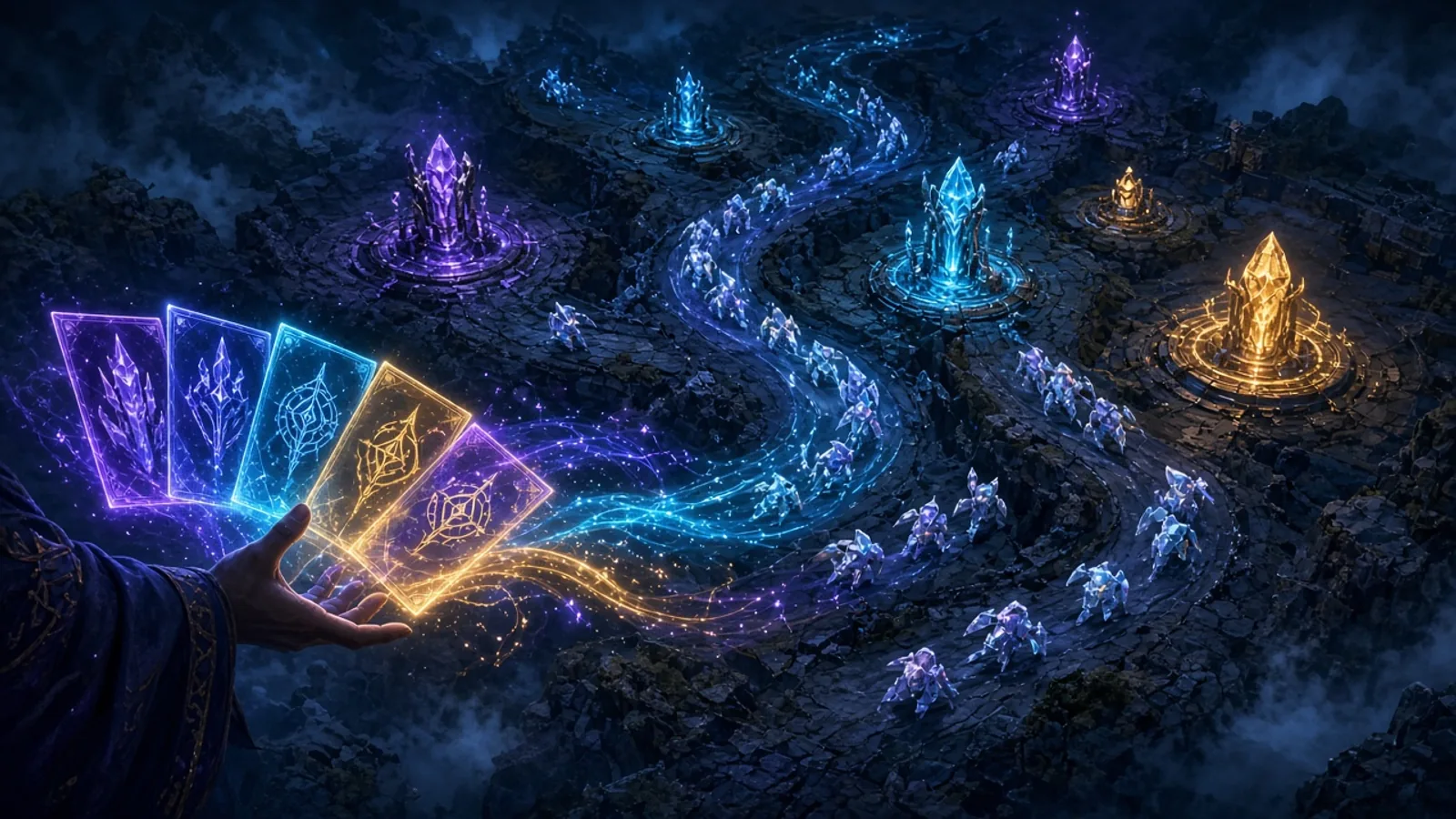
Tower Tactics II is a single-player roguelike deckbuilder and tower-defense sequel from solo developer asraworks, published by Assemble Entertainment. Instead of selecting defenses from a fixed construction menu, the player draws towers, spells, tile changes, and upgrades as cards, then uses that hand to survive waves on a changing map.
A run starts with a character, starting cards, and trinkets. Battles add cards and resources, while map choices, shops, events, and bosses change the route. Towers can apply effects such as burn or poison, and three matching towers placed together can merge into a stronger version. Hero cards and relics push a deck toward a particular combination rather than asking every run to build the same line.
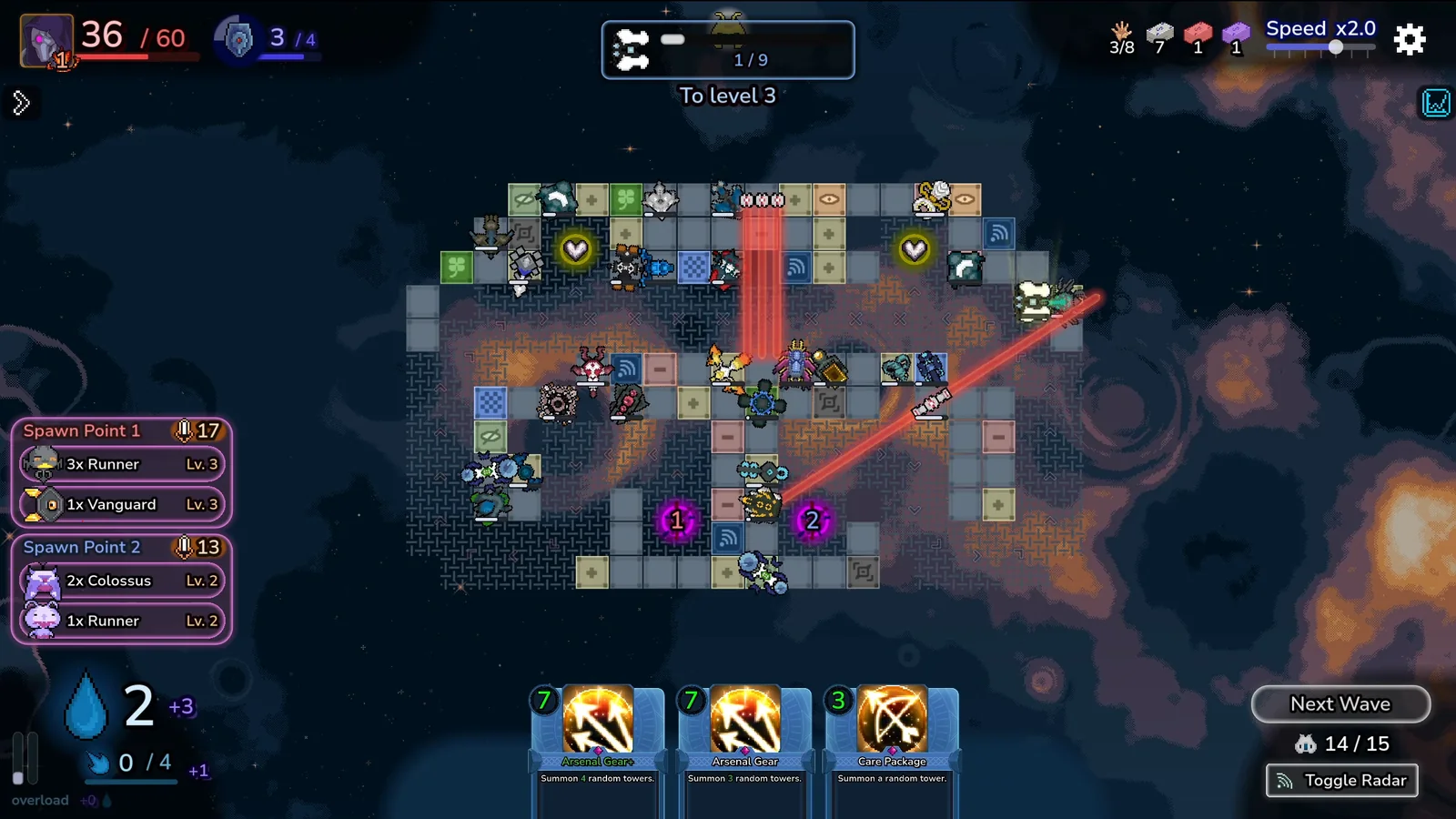
The Early Access launch release lists five playable characters, more than 190 cards, 150 trinkets, ten Ascension levels, 15 story quests, and four additional modes: Survival, Maze Builder, Sandbox, and Crystal Mines. A map editor and Steam Workshop are already available. The developer expects Early Access to last one to two years and estimates more than 100 hours in the current build, but the latter remains a creator claim rather than a measured campaign length.
How the game has been received
Early reception is positive and still small. On 12 October, Steam showed 37 positive recommendations and two negative, a Positive result from 39 reviews. There is no useful Metacritic or OpenCritic aggregate for this Early Access launch.
Jason Brown's Early Access review for Card Gamer called the genre combination smart, the rules intuitive, and the build unusually polished, with the editor and Workshop strengthening its future. Feor at No Time Reviews also praised the core loop and replay value, but found sharp balance differences between characters: the Weaver struggled to stop early waves while the Warlord was difficult to lose with.
The Chum score measures streamability. It does not rate conventional game quality. Early Access balance and player sentiment can change.
The streamer verdict
The game supplies decisions at a useful rhythm. Chat can argue over a card, route, trinket, or tower position, then watch the wave test that choice. Five character pools give those decisions different shapes across later streams instead of turning every run into the same optimisation problem.
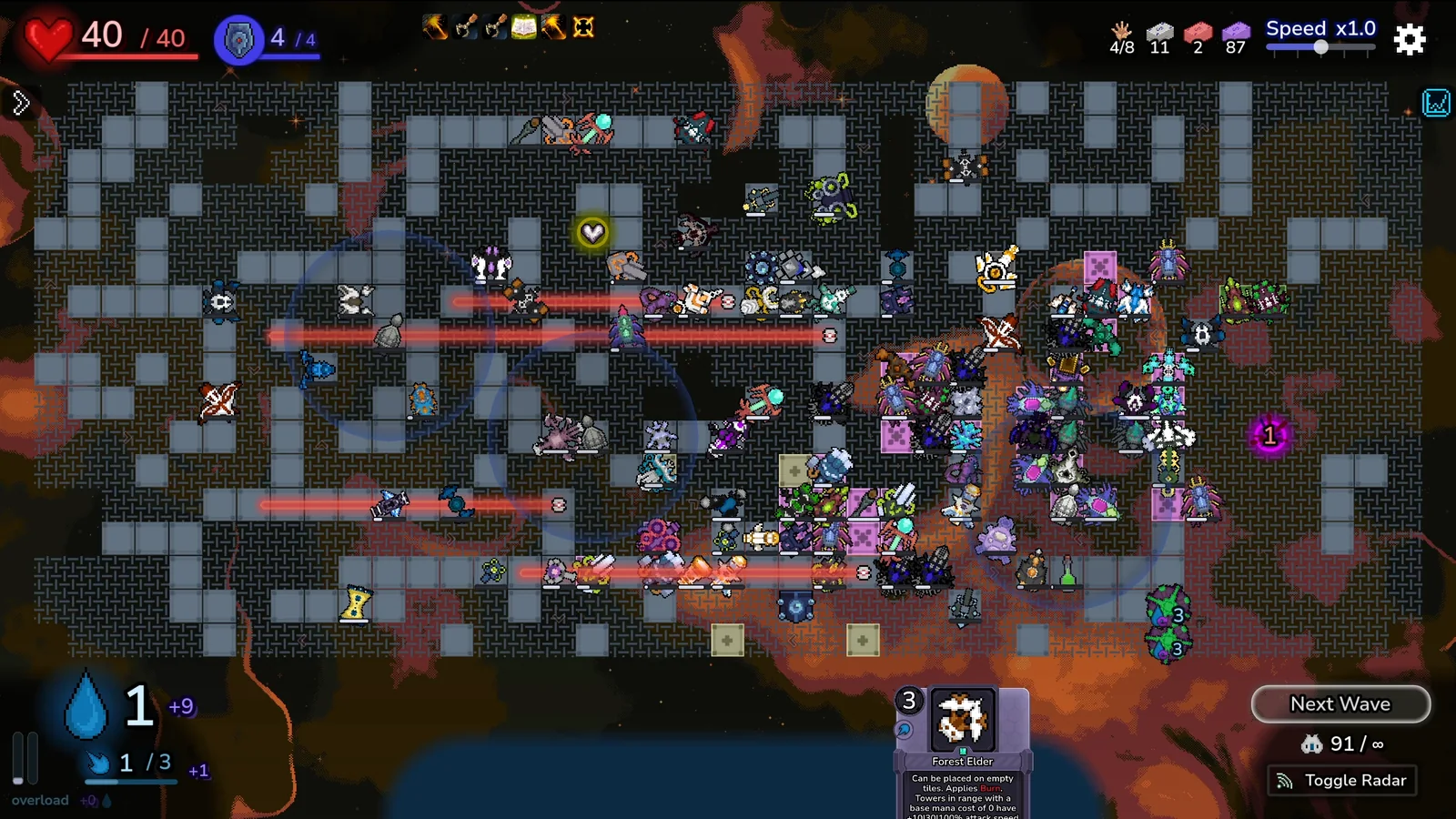
Legibility is the limit. Pixel-sized units, status effects, lanes, resources, cards, and speed controls compete for attention. A viewer who arrives during a dense wave cannot infer the build from the screen alone. The host has to name the plan before pressing the next-wave button and recap what changed after it ends.
Put chat on the draft
Let chat choose one card whenever a reward offers three options, while the host keeps control of removals and placements. Mark every chat pick and compare how many survive into the final deck. The audience gets ownership without turning a strategy run into unrestricted backseating.
Final verdict
Tower Tactics II earns a provisional 7/10 Chum score. Its run structure and volume of content are excellent for a strategy series, but the broadcast only works when the creator translates a busy board into a simple plan.